

Andrew Liddle, Guest Writer
A Maryport Man Painting Cumbria’s Rich History

"A New Revolution"
Moonlit view of Carlisle from the south west. 1863 ( with Dixon's Chimney half constructed) acrylics on canvas.
The eye is immediately drawn to a picture on his studio wall of Carlisle railway station teeming with humanity. It has the 1930s written all over it in style and setting - all the naive realism of one of those sprawling multi-figure compositions of Stanley Spencer.
Actually, it was done as recently as 2021!
Like all Kevin Nutter’s incredible pictures, it’s not so much a scene as a story in itself. The great border city, where he has lived for the last seven years, is little more than twenty miles from the coast. Local folk have been flocking from it to the nearest beach at Silloth, a pretty little town on the Solway Firth, since the railway came in 1870. “It’s always been Carlisle’s first choice for a seaside outing,” he says. “On Bank holidays, the trains would be packed.”
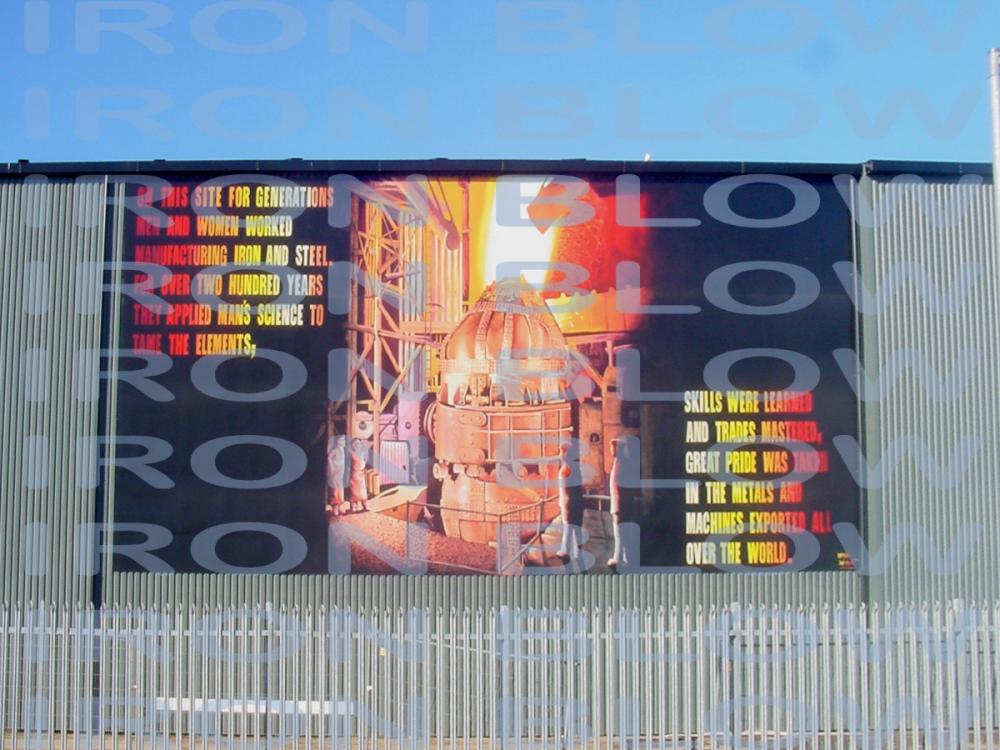
Iron Blow
Much of his work is infused with this robust sense of the life of Cumbria and it strikes a chord with the modern generation. “People seem to like paintings that have a narrative relating to a place and time,” he muses. “Maybe these days their roots run less deep and they’re searching for an identity. There’s more local nostalgia during these hard times.” Not surprisingly this is one of his most popular prints.
A dozen miles down the great sweep of coast from Silloth lies Maryport, where he was born and raised. Here his remarkable talent was first recognised by parents and relatives when he was only three years old. At Ellenborough Junior School he was allowed to spend any free time drawing, and at Netherhall Comprehensive he often found himself teaching artistic techniques to classmates when he wasn’t decorating the classrooms with murals.
“If I’d ever seen it, I could memorise it and paint it,” he says. “At the age of 10, Vermeer was my hero and I wanted to paint like him.” He sold his first work when he was 11. By 14, he was brightening up restaurants in Workington and Maryport with a series of contrasting murals.

Just another bridge in the water
After school he did a Foundation Course Carlisle College of Art and Design. It seemed he was destined for a career in art and, indeed, his first job was as a graphic designer in a small firm in Workington.
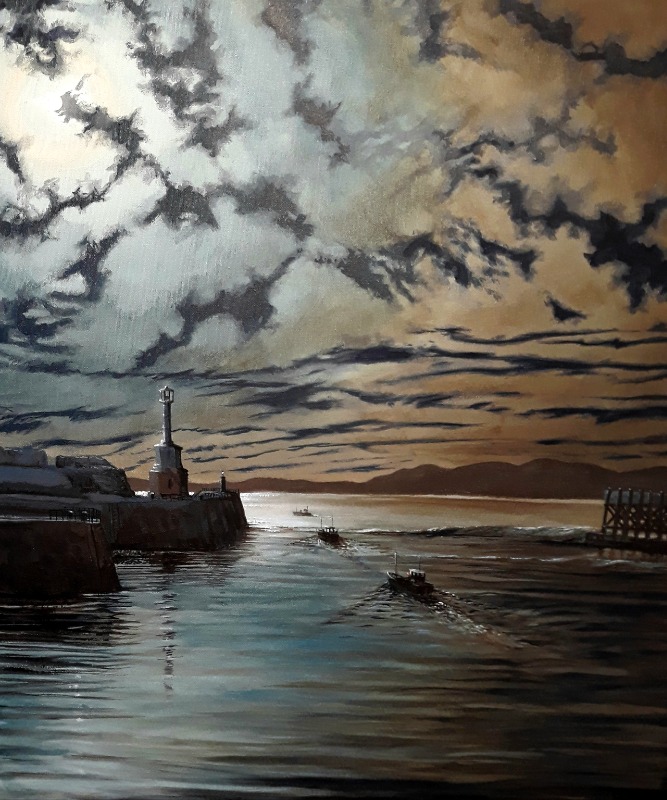
When herring ran Maryport harbour
Now all of that has gone but the small light at the end of the breakwater still shines like a dim candle and local folk memory is embodied in such local scenes. “Once the area had pits where hundreds of men worked, ships were built on the banks of the River Ellen and the factories worked round the clock. The docks have silted up but once they handled 400,00 tons of cargo a year.”
His online gallery boasts two striking black and white portraits of man and wife, the roguish H and the long-suffering Martha, both heavily lined and prematurely old. They are Maryport people he remembers affectionately but without sentimentality. “Yes, they’re real flesh and blood,” he says,” at the same time as they are representative of their times, a generation worn down by hard work and poverty.”
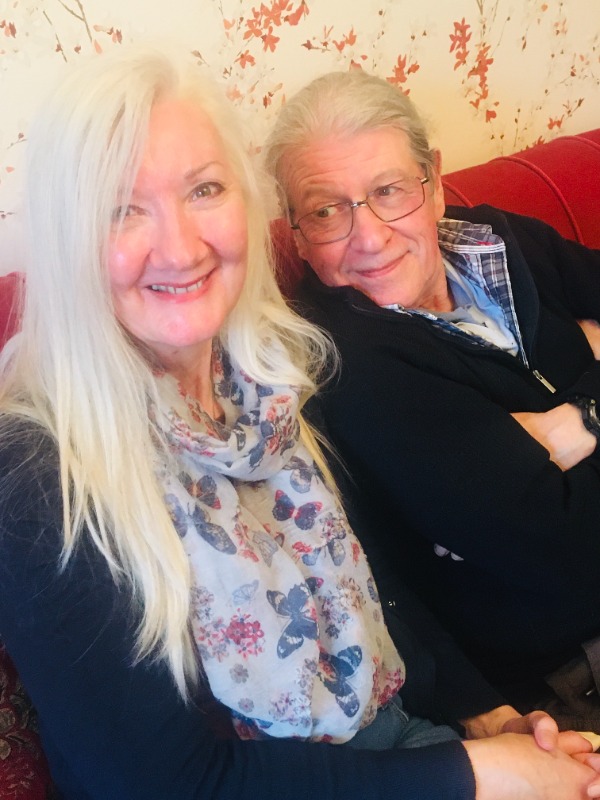
Dottie and Kevin Nutter
“Of course, I always had the evenings to paint, and I was never without commissions,” he adds. “Without the understanding gained from these experiences , I’d probably see the world differently - and paint differently.”
He’s clearly talking more of vision than technique, which has long been to work rapidly in acrylics, recently on boxed-frame canvas . He laughs: “I use acrylics for a living – and paint in watercolours more as a hobby".

"Is there anyone there?" acrylic on canvas panel. My version of a detail of a character from "The Experiment" by Joseph Wright of Derby.
The digital gallery showcases the work of a man for all seasons who paints in an astonishing variety of styles. Just Another Bridge, a masterly interpretation of a fortified section of the Roman wall crossing the River Eden, near its confluence with the Caldew, is one of those sylvan scenes from the High Renaissance. Carlisle Ship Canal Basin might have been painted by a Dutch master.
The Rudd Lasses, congregating at Carlisle’s market cross, in 1890, to sell the soft red stone from the Caldew at Dalston, employs the narrative conventions of Victorian painting, the same allusion and symbolism, to highlight the plight of women. Towards Spring, Lanercost Priory, Cumberland, 1912 is an archetypal Edwardian English scene, the ploughman plodding behind his team of shire horses.
"I think of a style that will suit the composition or be appropriate to the commission or the clients’ brief, then I just paint it!” Pressed for more details, he seems momentarily lost in thought, slipping into the Cumbrian dialect of his youth: “Ah’s a dab ’and wid a dutty stick!” As the smile fades, he adds, “You could say each mark, shape, tone, colour is considered and chosen to purposefully achieve a particular mood.”
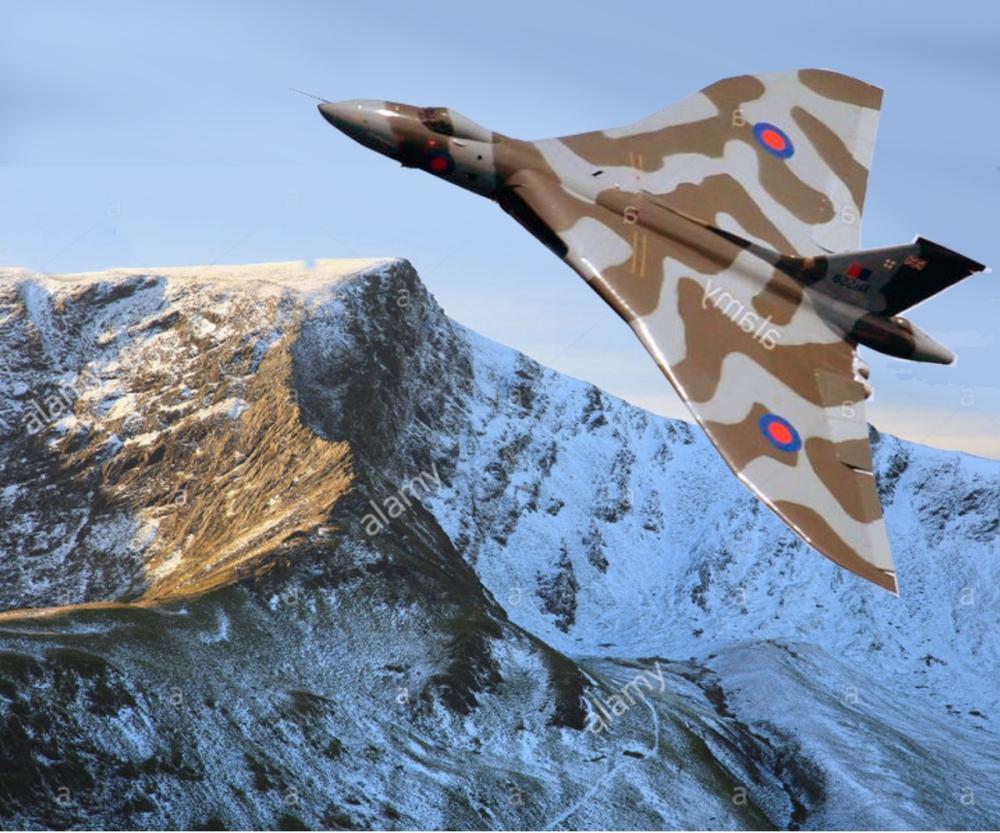
Vulcan
We see the social landmarks of their day, the old pubs and warehouses, town square and village greens, jetties and dockyards, bridges and boulevards. Sometimes the palette is piercingly bright; at other times, it will be subdued.
His portrait gallery bursts with the energy of sportsmen like Boris Becker, Mike Tyson and ‘El Maestro’, the great Argentinean racing driver Fangio - and musicians, Lennon and McCartney, Bob Dylan and Eric Clapton. His meticulously detailed studies of falcons and foxes, farmyard animals - horses a speciality - reflect his love of wildlife and the great outdoors.
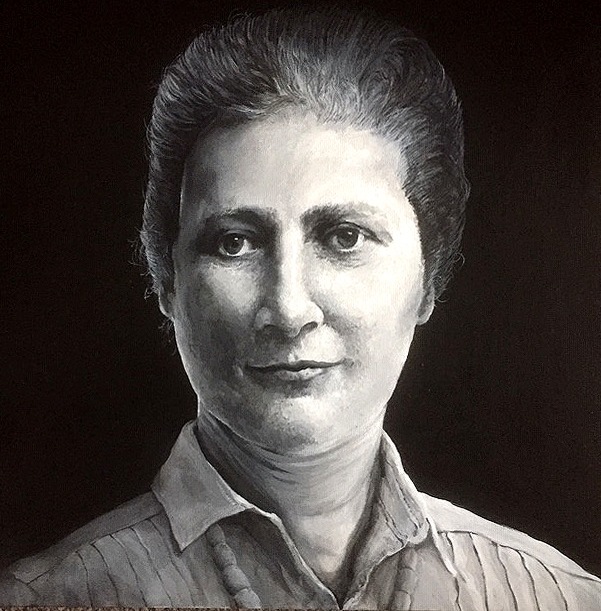
Beatrix Potter
"I don't paint the Lakes often, because there are hundreds of artists in the Lake District painting them – and hundreds more not in the Lake District doing the same!”
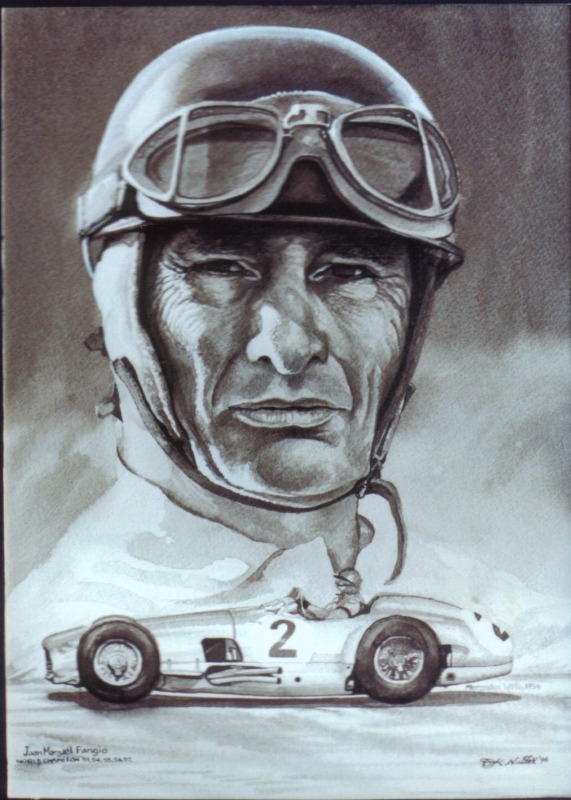
Fangio sepia ink, pen & wash painting on bockingford watercolour paper , of Argentinian motor racing hero.
There are so many scenic vistas he wants to capture – but not just in acrylics! “It would take several lifetimes of painting and research just to scratch the surface.” He wants to paint their story!