

Phil Hopkins, Commissioning Editor
There Was No Worst Of Times!
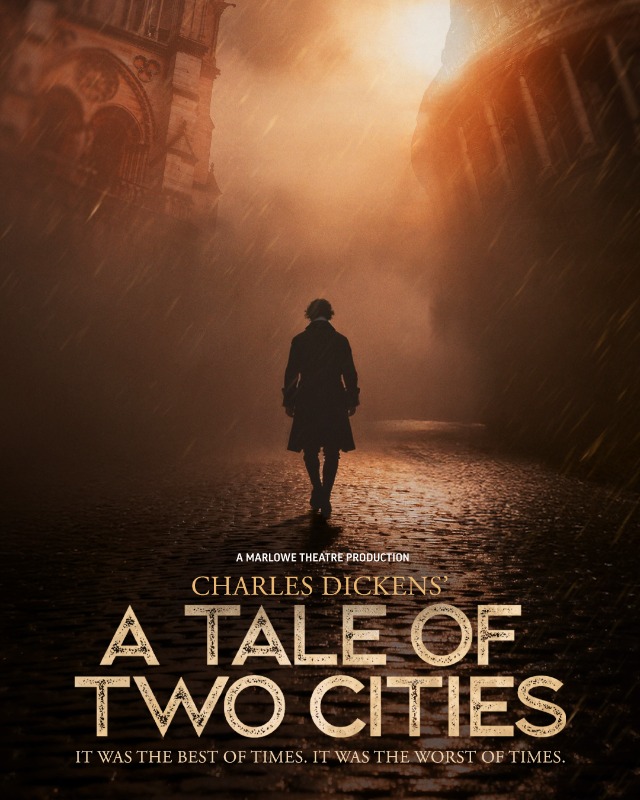
Marlowe Theatre’s production of Charles Dickens’ A Tale of Two Cities, originally adapted for stage by Terence Rattigan and John Gielgud, was gripping from start to finish: absolute quality.
Despite having very little scenery or props, the players were so strong that your imagination filled all the gaps and, thanks to Ben Jacobs’ lighting design, Max Jones’ simple but superb set and Kinnetia Isidore’s costumes, all anchored by direction from Michael Fentiman, this proved itself to be classical acting at its best.
It felt as if there was so much experience on stage and that everyone was in total command of their part.
Rattigan and Gielgud must have had a mammoth task when they set about translating one of the best-selling novels of all time – more than 135,000 words – into a palatable, two-hour play. But, they did just that in 1935 although the text was mothballed until its world premiere in 2013.
Now, having seen this excellent piece of theatre, you wonder why it took more than eight decades to first see the light of day.
But at Leeds Playhouse the nervousness of the British monarchy as France’s revolution raged, and the ever-present threat to life was brought poetically into existence.
In 1770s Paris, revolution is stirring. Sydney Carton (Samuel Collings) is a brilliant yet cynical barrister from England.
Charles Darnay (Ed Sayer) is the rebel child of French aristocrats. When they both fall for charming émigré Lucie Manette (Jordan Loughran), a chain of events is set in motion which will endanger everyone.
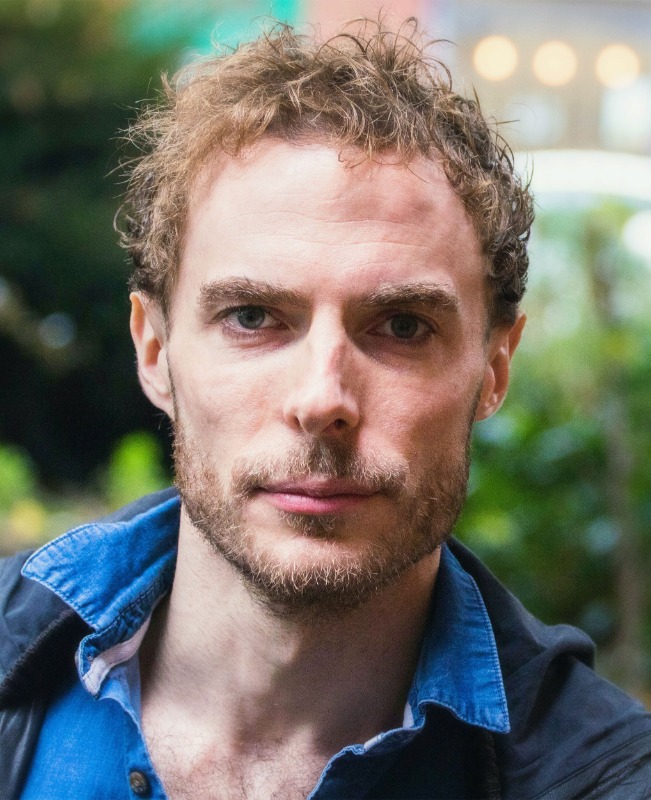
Samuel Collings. Photo: Tyler-Fayose
Fentiman chose to play his scenes on a simple, plain stage whilst cleverly parking residual members of the company in a motionless tableau to the rear of the stage.
Everything was minimalist but so alive, thanks in part to Richard Hammarton’s sound design and Barnaby Race’s music.
Based on one of the best-selling novels of all time, this epic story of love, sacrifice and redemption asks: is there any price too great to pay for love?
Samuel Collings was just brilliant as the main protagonists and what a totally mesmerising end as his character Carton utters those most famous of lines: “It is a far, far better thing that I do, than I have ever done; it is a far, far better rest that I go to than I have ever known.”
Nothing so crude as a guillotine, just a descending light giving the appearance of a falling blade. The cast were all worthy of mention but, in the absence of enough words, they are best summed up in two words: totally believable.
Michael Fentiman, Director, said: “We’ve assembled a remarkable cast (and) I'm thrilled that we will visit so many beautiful and important theatres across the UK, giving audiences the opportunity to rediscover one of our greatest novels in what I believe (is) a bold new production.
“We (have) endeavoured to honour the richness of the original while creating a staging that vibrates with all of the excitement and invention of the modern theatre.”
Recommended.
Quarry Theatre, Leeds Playhouse
Until Saturday 26th September
Box office 0113 213 7700
www.leedsplayhouse.org.uk