

Jeremy Williams, Arts Correspondent
Albums: Paul Heaton Jenius
Tracks: Can't Get Next To You, Favourite Kind Of Idiot (ft. Rianne Downey), I Want The Job (ft. Rianne Downey), Sad Songs and Lawsuits, She Ain't Pretty (ft. Rianne Downey), One Eye Open, Send In The Clowns, Do Not Ask Me (ft. Rianne Downey), Don't Lean On Me (ft. Rianne Downey), Jet Black Sky, The Whisky Did (ft. Rianne Downey and Declan O'Rourke), Before Before (ft. Rianne Downey), Good For The Bees, Go Upstream, A Son A Father
Label: EMI
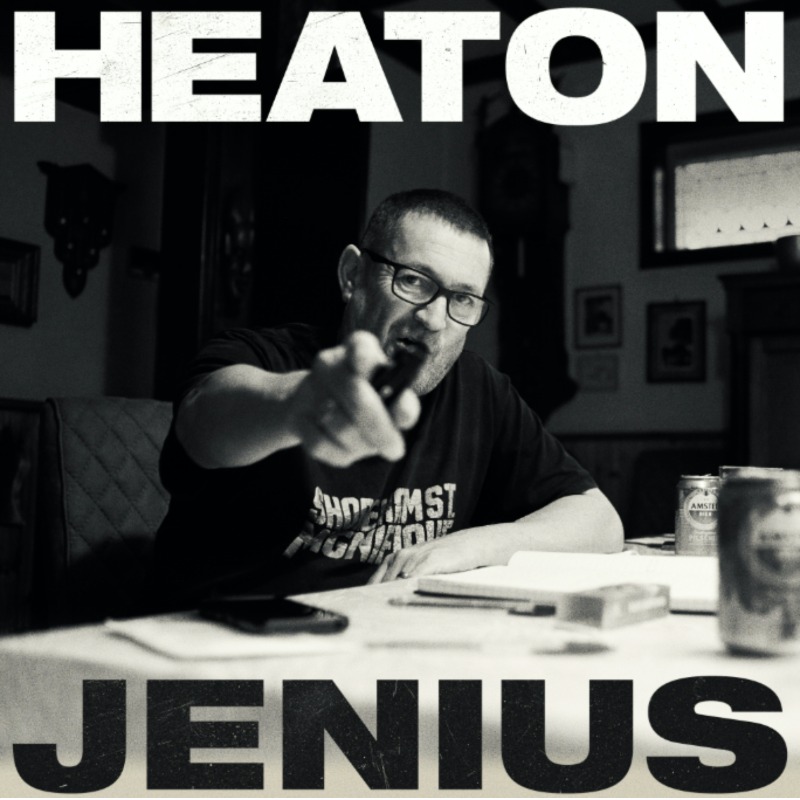
From the wiry, irreverent brilliance of The Housemartins, through the darker, sharper and criminally underrated catalogue of The Beautiful South, to his increasingly accomplished solo career, Heaton has built an extraordinary body of work. Few artists have his ability to take the everyday realities of British life — relationships, family, alcohol, politics, disappointment, foolishness — and transform them into memorable pop songs while retaining both warmth and humour.
Jenius is another compelling example of what makes him so special. There is a confidence throughout the record, coupled with his remarkable knack for making complex ideas appear wonderfully straightforward. The music shifts comfortably between infectious pop, orchestral flourishes, ska, glam rock and understated balladry, but it is the writing that remains at the heart of everything.
Favourite Kind Of Idiot has an irresistible charm, while I Want The Job delivers a generous dose of romantic sweep. Sad Songs And Lawsuits demonstrates Heaton’s gift for sharp observation and dry comedy. Rianne Downey remains an excellent vocal counterpart, and Heaton’s seasoned band supplies all the flexibility and energy the material demands. Ian Broudie’s production adds clarity and polish while wisely leaving the peculiarities of Heaton’s songwriting intact.
Then come the moments that demand your full attention. Good For The Bees is a beautifully melancholy ballad, while A Son A Father brings the album to a wonderfully outrageous conclusion, combining glam-rock exuberance with Heaton’s characteristic refusal to offer neat answers about the contradictions of being human. It is amusing, touching, awkward and unmistakably his.
That may well explain why Heaton has remained so relevant for so long. He has never seemed interested in constructing a persona. Instead, he writes about people in all their contradictory glory: imperfect, affectionate, selfish, optimistic, ridiculous and occasionally heartbreaking. Somehow, those very specific observations consistently become stories in which almost anyone can recognise themselves.
There has always been an argument that Heaton’s achievements have not been properly acknowledged by the establishment. The absence of even a Mercury Prize nomination, never mind a victory, is remarkable given the consistency, influence and sheer durability of his songwriting. Yet the affection of his audience says plenty. An artist who can continue filling venues, keep ticket prices comparatively accessible and produce exceptional material after forty years clearly has a connection with people that awards cannot measure.
Jenius makes that case even stronger. It is adventurous without becoming self-important, humorous without sacrificing substance, emotional without drifting into sentimentality and, most importantly, overflowing with excellent songs.
Heaton’s career has already given us an astonishing musical legacy, from The Housemartins and The Beautiful South through his solo work. Jenius adds another substantial chapter to it. At this point, calling him a genius may be less of a joke than it once seemed.