

Artis-Ann , Features Writer
…And All That: Bayeux Tapestry The Epic Poem By Martin Kiszko
As well as historical detail of the events, the tapestry also affords glimpses of eleventh century weaponry and armour, farming, cooking and seafaring as well as hidden depictions of some of Aesop’s Fables and mythical creatures such as dragons and centaurs.
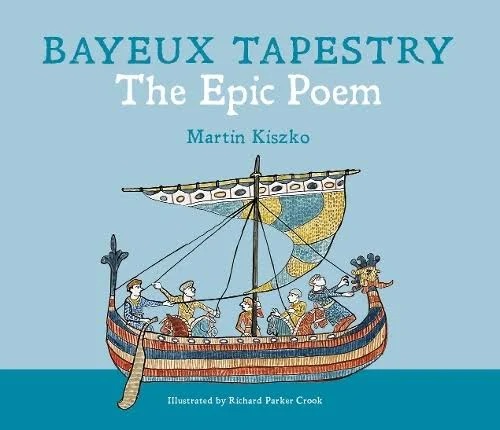
How fortuitous then that Martin Kiszko, ‘the UK’s Green Poet’, has released ‘Bayeux Tapestry The Epic Poem’, written to celebrate jointly, the thousandth anniversary of the birth of William the Conqueror and the arrival of the Bayeux Tapestry in London. The foreword describes it as a ‘fun and detailed textual and illustrative shorthand of the tapestry’ which invites ‘tapestry detectives of all ages [to] make their own deductions about the mysterious, speculative and incomplete sections of the tapestry’s story’.
Edward the Confessor was childless and his death brought forth several claimants to the throne, which happened more commonly at that time. Harold was crowned King. The appearance of Halley’s comet which features in the tapestry could have been seen, however, to be ‘A dire omen of what may lie ahead’ as Kiszko explains, since William would ‘take that usurper down’.
The political machinations of the time, the skirmishes, the negotiations and the betrayals all feature. Harold had promised to support William’s claim to the throne but when the time came, he took the throne for himself. William, so it appears, did not play fair, among other things reneging on guarantees to free Harold’s relatives, perhaps to keep Harold ‘under his thumb’.
While the names of Harold and William may seem familiar enough to the modern reader, the older names, no longer used, have a poetry of their own and although this epic poem does not take long to read, it benefits from greater study. It is, to quote Professor Ronald Hutton, ‘A skilful and enjoyable poetic representation of the world’s most famous tapestry.’
This thoughtful and lengthy series of rhyming four-line stanzas is beautifully enhanced with illustrations on every page by Richard Parker Crook, whose work cannot be underestimated. Words and pictures combine to create a very satisfying book to suit a broad age range of readers and inquisitive minds.