
12:06 AM 19th August 2026
As Music GCSE Results Roll In, What Does The Next Generation Of Musicians Need Across The North?
The bigger picture for music education at GCSE level remains cautiously optimistic. Last year, music GCSE results published by the Joint Council for Qualifications showed a 6.1% increase in music entries across the UK. Coupled with an 8.7% rise in 2024, this is positive change, but it takes place against a worrying backdrop: music GCSE entries in England have fallen by 25.6% since 2010. The recent removal of the English Baccalaureate, which encouraged schools to focus on non-arts subjects for their students, has gone some way in improving the situation, but the Royal Philharmonic Orchestra (RPO) wanted to explore solutions from the people who know these students best – their parents.
.jpg)
Vasily Petrenko
Photo: Graham Flack Photography©
RPO research carried out over the summer asked a nationally representative sample of 2,000 parents what they felt could be done to encourage more young people to get involved in classical and orchestral music.
The top factors cited in Yorkshire and The Humber were: giving more young people the opportunity to play in an orchestra at school (34%) and more school trips to classical or orchestral concerts (27%). People in the North East were more likely to call for more music lessons at school, where young people could listen to the music (30%) and they also backed the idea of conductors and people who are in orchestras visiting schools more often (23%). In the North West parents would like to see more music lessons at school (36%), more school trips to classical or orchestra concerts (29%), more classical music visibility on YouTube and social media (24%)
Across the north, one in four survey respondents felt their children would be more likely to get involved with classical music if it was in the mainstream music charts like the UK Top 40.
.jpg)
Sarah Bardwell
Photo: Sarah Louise Bennett©
“While it is of course heartening to see a rise in music GCSE uptake – something we hope to see continue in the 2026 results – it is clear that more needs to be done to safeguard the musicians and audiences of tomorrow. The RPO’s engagement work with young people is a vital way of filling the gaps left by underfunding in formal music education, and our players find it hugely fulfilling – but this latest data shows that we need more action at a government level to build more opportunities for young people to enjoy orchestral music.”
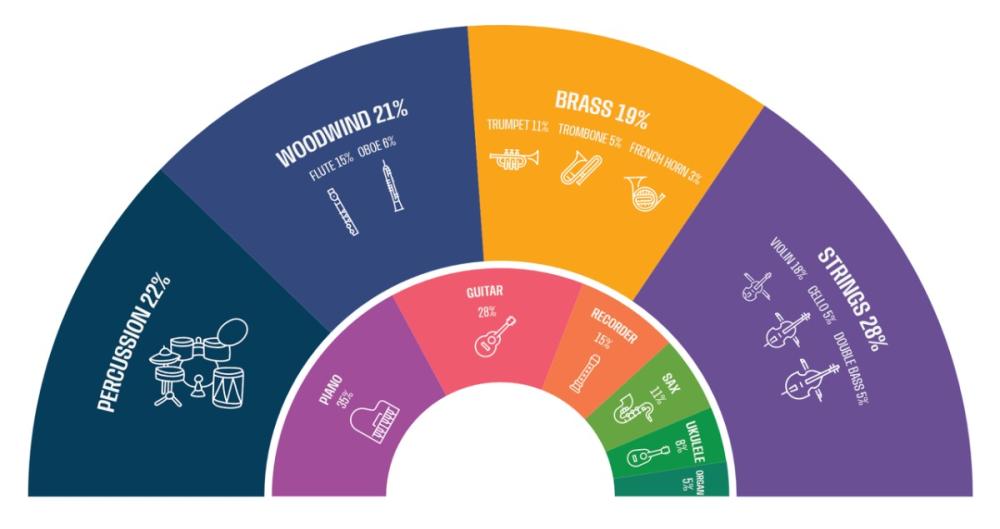
For those already interested in classical music at a young age, the RPO research explored what instruments school children are learning or would like the opportunity to learn to play – painting a picture of what tomorrow’s orchestra might look like.
Across Yorkshire and the Humber, the piano remains at the top of the list (38%), above the national average, followed by the guitar (30%), the violin (18%), drums (17%) and the flute (13%).
In the North East, guitar and piano were joint top (26%), followed by the saxophone (15%) and the trumpet (12%).
In the North West the most popular musical instruments are piano (33%), guitar (27%), flute (22%), violin (19%), recorder (18%) bass guitar (10%), and ukulele (9%)
French horns and trombones, however, remain ‘endangered’, chosen by only 3% in the North East and 3% of children in Yorkshire and the Humber.