

Jeremy Williams, Arts Correspondent
Clark Datchler: Soul, Second Chances And Shattered Dreams
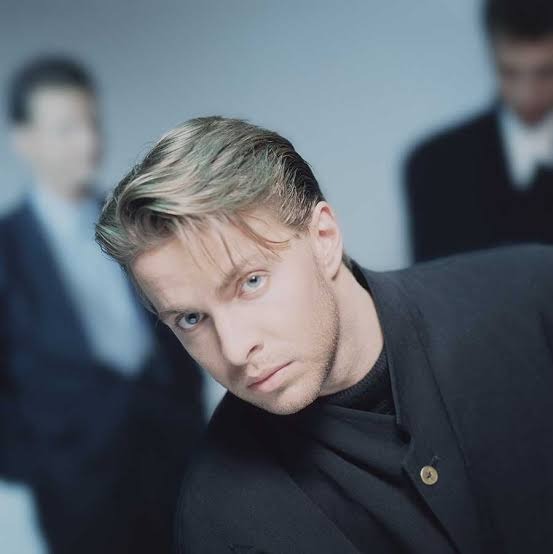
Clark Datchler
My history with Clark Datchler goes back to the Johnny Hates Jazz comeback campaign. I was involved in helping to promote the band's return, including working on the campaign that helped get them back onto BBC Radio 2, among other things. So when Clark and I caught up again, there was already a shared history — one that stretches back to the band's extraordinary return to the spotlight.
And there is still plenty of spotlight to go around. More than four decades after Johnny Hates Jazz first emerged, the band's music continues to find new audiences, with more than 1.5 million monthly listeners on Spotify. Now, with a new single, Soul Believer, featuring soul legend Jaki Graham, a major anniversary on the horizon and a new tour in the works, Datchler is showing little sign of slowing down.
I began by asking him a question that doesn't normally feature in the standard music interview: is he feeling brave?
"I am actually," he says. "When I was younger and just starting out in music, that required a certain kind of bravery. But it was matched by the fact that I was less experienced and probably a good deal less wise. As you get older, you acquire a little bit of wisdom, so your bravery is matched by a degree of intellect and awareness — self-awareness — that I probably didn't have when I was younger. I'm kind of gung-ho at the moment."
That attitude becomes apparent very quickly.
Asked about his most irrational fear, Datchler doesn't hesitate. Raisins.
"Easy. My most irrational fear are raisins. They're the food of Satan — not that I actually believe there is such a thing as Satan, but if there was, they'd be close to it."
There is, however, one loophole: scones.
"I can eat them in scones and that's about as far as it goes. You can't get scones without raisins, but if the raisins are in the scones, you think about it as a dollop of cream and a dollop of jam. You're hiding the taste of the raisins pretty effectively."
Grapes, thankfully, are completely acceptable. Other dried fruit is fine too. Raisins and sultanas remain firmly on the blacklist.
It is a wonderfully human glimpse of the man behind one of British pop's most recognisable catalogues — and that willingness to laugh at himself is something Datchler believes has always been important.
"I was young and I think I did it just to shock people in public situations," he recalls.
Eventually, the story reached the attention of a national broadcaster, who decided it might make suitable television.
"I remember there's a picture around of me wearing a yellow sou'wester, with my hands behind my head, ready to plunge my face into a bowl of spaghetti. I think it was some kind of challenge for the TV show. And really, in retrospect, I think, 'What on earth were you doing?'"
It was a curious contrast with the seriousness with which Datchler approached his music. Johnny Hates Jazz's second single, I Don't Want To Be A Hero, was an explicitly anti-war song, reflecting a songwriter who took his craft and his message seriously.
"But in certain areas, I just wanted to have a laugh," he says. "There was a huge pressure to play a part, to play the mystical pop star, and I always thought that was slightly ludicrous. It was an act. I didn't want to do it. I wanted to see the funny side of a lot of things, especially fame."
For Datchler, humour was more than entertainment. It was grounding. "It kind of kept my feet on the ground."
That combination of seriousness about the music and a refusal to take the trappings of fame too seriously perhaps explains some of Datchler's choices when asked which act he would bring back if he had a million pounds to invest.
Not Queen, despite his admiration for them, but the original line-up of 10cc.
Datchler remains passionate about the band's contribution to British music, particularly the original quartet of Graham Gouldman, Eric Stewart, Kevin Godley and Lol Creme.
"To me, 10cc were one of the most innovative and important bands in British music history," he says. "I think they've been greatly overlooked in favour of today's world focusing on bands like Queen in the 70s."
He reels off a list of alternatives — Pink Floyd, the Moody Blues, Led Zeppelin, Genesis — and admits that he would love nothing more than to see the original 10cc members together again.
"That would be an incredibly moving experience for me."
It is a fitting choice for an artist whose own career has been defined not simply by nostalgia, but by reinvention.
That brings us to the present, and Datchler's latest release, Soul Believer, which sees Johnny Hates Jazz teaming up with soul legend Jaki Graham. The collaboration came about almost spontaneously after the pair met backstage at London's Uptown Festival.
"We'd met very briefly before, but this time we had a good old chat and just got on like a house on fire," Datchler recalls.
The conversation lasted around an hour and a half. By the end, Datchler, Graham and her daughter Natalie, who manages her, had floated the idea of working together.
A few days later, Datchler and Johnny Hates Jazz bandmate Mike Nocito were discussing a track they had been developing.
"We just thought, why don't we ask Jaki if she wants to sing on it with me?"
The response was immediate.
"We sent her the track and she just said, 'That's my song. That's my song.'"
Graham came to Datchler's studio a few days later to record her vocal. The track was subsequently mixed by Dave Bascombe, whose credits include work with artists such as Tears for Fears and U2.
The result is Soul Believer, a song that Datchler believes has genuine staying power.
Part of its appeal lies in a clever lyrical conceit. The lyrics incorporate approximately 27 titles from classic soul songs of the 1960s, 70s and 80s.
"If you didn't know that, you just hear it as a lyric," he explains. "But when you do know it, you'll start recognising all these song titles."
For Datchler, the response has confirmed his instinct that the song would connect.
"I did, to be honest," he says when asked whether he expected such a warm reception. "That doesn't mean to sound like I'm a know-it-all. I'm really not. But you do, as a musician — especially as I'm the writer of these songs — have a sense about what's going to communicate with people."
.png)
"Music is about communication, first and foremost. So you know when something's going to resonate."
And he has a feeling Soul Believer may be around for quite some time yet.
"I really thought Soul Believer was going to resonate with people. I think it has a future ahead of it. It might actually be quite a long-term future."
There is more to come. Datchler and Graham are preparing to launch an audiovisual podcast, Soul Believers, which will explore the history of soul music, with the pair also performing acoustic versions of songs during each programme.
And then there is Johnny Hates Jazz.
Next year marks 40 years since the release of Shattered Dreams, the song that helped define the band's place in British pop history. To mark the anniversary, Datchler and Mike Nocito are planning a Shattered Dreams tour across the UK and beyond.
There will also be a double album, Shattered Dreams: The Album, bringing together the best of Johnny Hates Jazz from the late 1980s through to the present day, alongside four new tracks.
One will be Soul Believer. Another will feature Jaki Graham, with two further new recordings coming from Johnny Hates Jazz themselves.
"It's going to be a big year next year," Datchler says. "Those kind of anniversaries obviously don't come around very often — and it might be our last time to do it. Who knows? So we're going to go for it."
There is something rather wonderful about that final sentiment. After all these years, there is no suggestion of simply revisiting the past. Instead, Datchler appears determined to celebrate it while continuing to create something new.
That spirit will also be evident at the forthcoming 80s Weekender in Blackpool, where Johnny Hates Jazz will appear alongside a formidable line-up including ABC, Kim Wilde and Nik Kershaw.
For Datchler, these festivals are about much more than nostalgia.
"The biggest thing is whether it's the festivals or our own shows, music is about communication to me. So you get the immediate communicative experience with a live audience."
The audiences at these events, he says, are particularly appreciative because they aren't simply celebrating individual artists. They're celebrating an entire era — and the memories attached to it.
There is also the pleasure of seeing old friends and fellow performers again. Kim Wilde, for example, sang backing vocals on Turn Back the Clock. Datchler mentions Martin Fry from ABC, Peter Cox from Go West, Nik Kershaw, The Christians, Hue and Cry, Toyah and others.
"They become almost social events where you see people that perhaps you've known for a long time, but you never had the chance to get to know well. And we're getting to know each other a little more now."
Johnny Hates Jazz will have around 45 minutes on stage at the 80s Weekender, so the set will naturally lean towards the band's classic material. But it won't be exclusively about the 1980s.
One song that has become an essential part of the band's live repertoire is Magnetised, the 2013 comeback single from the album of the same name.
Interestingly, Datchler says the reaction to Magnetised now rivals that of the band's best-known classic material.
"Whenever we play it, it gets exactly the same reception as Turn Back the Clock with Shattered Dreams. It's really incredible how people have taken that song to their hearts."
There will also be material from the more recent Wide Awake album, including Spirit of Love, and potentially Soul Believer.
The result will be a cross-section of Johnny Hates Jazz across the decades rather than a simple exercise in looking backwards.
And perhaps that is the most interesting thing about Clark Datchler's story today.
The man who once found himself being asked to put his face into a bowl of spaghetti for television is now looking back on four decades of music with considerably more wisdom — but apparently no less bravery.
He remains fascinated by music, passionate about soul, excited by collaboration and, crucially, willing to laugh at himself.
As Johnny Hates Jazz approaches the 40th anniversary of Shattered Dreams, the past is clearly still present. But for Clark Datchler, it isn't where the story ends.
There are new songs, new collaborations, a new podcast, a major tour and another chapter waiting to be written.
And, presumably, absolutely no raisins.