

Andrew Palmer, Group Editor
Classical Music: Beethoven String Quartets Vol 3
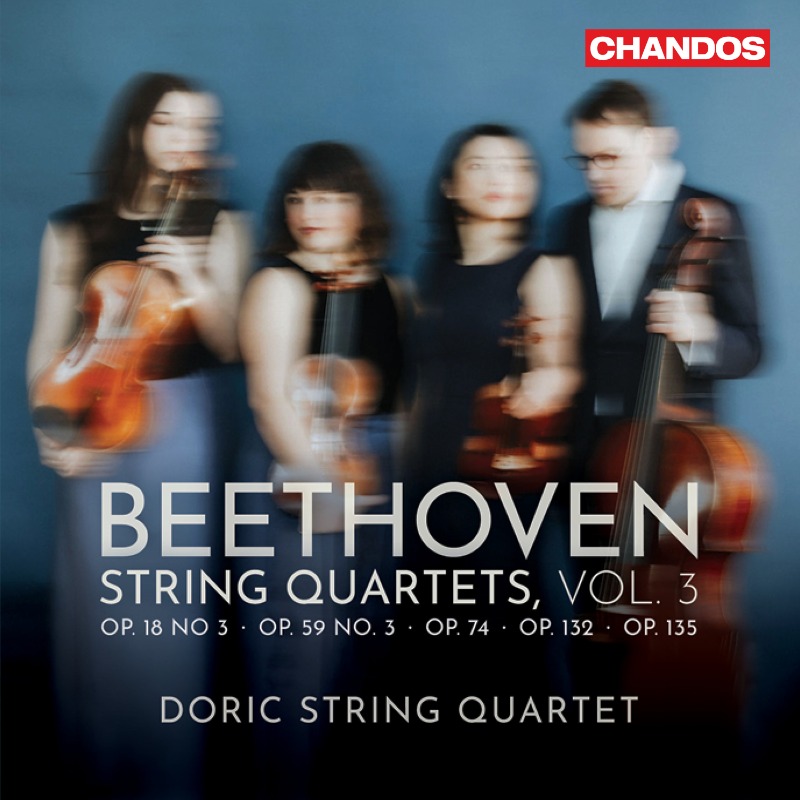
String Quartet in D major, Op. 18 No. 3; String Quartet in C major, Op. 59 No. 3; String Quartet in E flat major, Op. 74 ‘Harp’; String Quartet in A minor, Op. 132; String Quartet in F major, Op. 135.
The Doric String Quartet
Maia Cabeza violin; Ying Xue violin; Emma Wernig viola; John Myerscough cello
Chandos CHAN 20320(2)
chandos.net
Op. 18 No. 3 is a quietly radical piece: each of its four movements opens at a hushed piano, and its thematic material is shared more evenly among the four players than was customary for the time. Op. 59 No. 3, the last of the three quartets Beethoven dedicated to Count Razumovsky – the Russian ambassador in Vienna, and no mean violinist himself – receives equally persuasive treatment, while Op. 74 sparkles in its first movement, where cascades of pizzicato and arpeggio give the work its nickname, the "Harp" Quartet.
It is the two late quartets that close the set, however, Op. 132 and Op. 135, that linger longest. These are works that bewildered and unsettled their first listeners, yet have gone on to inspire generations of composers and are now numbered among the greatest music ever written – and the Doric make the case for that judgement afresh.
The playing throughout is exquisite: every phrase and melodic line judged with the patience of a sauce reduced slowly until each ingredient has melted into the next, its flavours and textures combined into one glistening whole. This is chamber playing at its most complete – light and shade caressed into every movement, tempo and pulse held together as a single collective breath. It is remarkably sensitive music-making.
Op. 135 is stunning: every passage carries meaning, the four players sound as though they are in conversation with themselves, and the listener is left rapt. The introduction to the finale, marked Grave, ma non troppo tratto, is done full justice – so well controlled, so finely balanced, that it is hard not to think, as I did while reviewing Mahler's Third Symphony this same week, of how directly its slow movement seems to have fed into the finale of that later work.
Op. 132 opens just as captivatingly, its long paragraphs unfolding with a resonance that never loosens its grip, the Doric meeting Beethoven's formidable technical demands without ever appearing to notice the effort involved. The result, across the disc, is playing of real exquisiteness – gorgeous, finely wrought, and drawn with all the fragility and delicacy that these extraordinary late works demand.