

Andrew Palmer, Group Editor
Classical Music: Celtic Nocturne
John Field: Nocturne Nos 1, 5, 9, 10, 11; Barry Douglas: Bataille des Celts; Song of the Sea; Celtic Waltz; Traditional: The Wild Colonial Boy; The Snowy-breasted Pearl; The Harp that Once through Tara’s Halls; Madam Cole; Young McDonough; The Summer Is Coming; Cockles and Mussels; The Mountains of Mourne; The Town I Loved So Well; Skibbereen; The Flower of Sweet Strabane; Welsh Lullaby; The Rose of Tralee; The Bard of Armagh
Barry Douglas (Piano)
Chandos CHAN 20365
Chandos.net
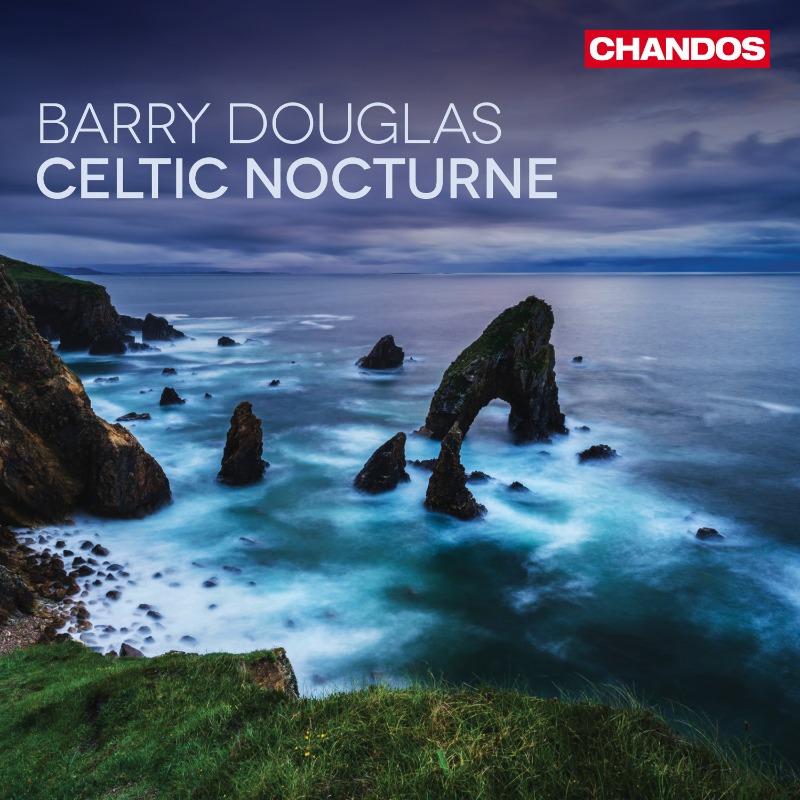
There is a tenderness that oozes from Barry Douglas's Steinway Model D — a gossamer touch, wonderful phrasing and dynamics, and a lovely harmonic language that makes the disc feel less like a recital than a long, late-evening conversation with the music of his homeland.
This is the third instalment in Douglas's Celtic series for Chandos, following Celtic Reflections (2014) and Celtic Airs (2016), and it weaves three strands together: nocturnes by John Field, traditional Irish melodies in Douglas's own arrangements, and three original compositions from the pianist himself. The common thread is the lyrical, melodic character that runs like a silver wire through Irish music, and Douglas's instinctive affinity for it shines throughout.
Thomas Moore (1779–1852) wrote both lyrics and music to the march-like ballad The Harp that Once through Tara's Halls in 1807, and Douglas evokes the instrument the song celebrates with a harp-like left-hand accompaniment that supports a strong, expressive melodic line. His own Bataille des Celts conjures the clash of ancient battles, while his Celtic Waltz — to these ears, at least — carries a faint echo of Satie's Gnossienne No. 1 in its hushed, sidelong melancholy.
The traditional songs are communicated with love. Cockles and Mussels, perhaps the most familiar of all, draws out the tragic narrative beneath the famous tune, while The Rose of Tralee is delivered with disarming simplicity. The disc closes with the plaintive The Bard of Armagh, attributed to Patrick Donnelly (1650–1716), an Irish Catholic bishop who, as Deirdre Gribbin notes in her insightful booklet essays, was forced by Catholic suppression to operate disguised as a wandering minstrel under the name Phelim Brady. Like many heroic rebel-outlaw ballads, the song in its present form dates from the mid-nineteenth century.
The Field Nocturnes are a joy — played with sensitivity and affection and slotted into the programme so that they feel less like classical interludes than first cousins to the folk material around them.
Occasionally there is a touch of melancholy, conveyed with an emotional intelligence that sums up the beauty of this disc. Everything seems to float in the ether, and one feels Douglas's deep connection to every bar. The Chandos recording quality and balance only add to the immersive experience.
Douglas, who won the Gold Medal at the 1986 Tchaikovsky International Piano Competition in Moscow and has gone on to play with most of the world's leading orchestras, celebrates his Irish heritage as Artistic Director of Camerata Ireland — the only all-Ireland orchestra — and of the Clandeboye Festival. That heritage is everywhere in this recital, lightly worn and warmly given.
Celtic Nocturne will not only appeal to the Irish diaspora; it will seduce many others to explore the Emerald Isle, its folklore and its songs. A wonderfully engaging and rewarding hour in the best of company.