

Andrew Palmer, Group Editor
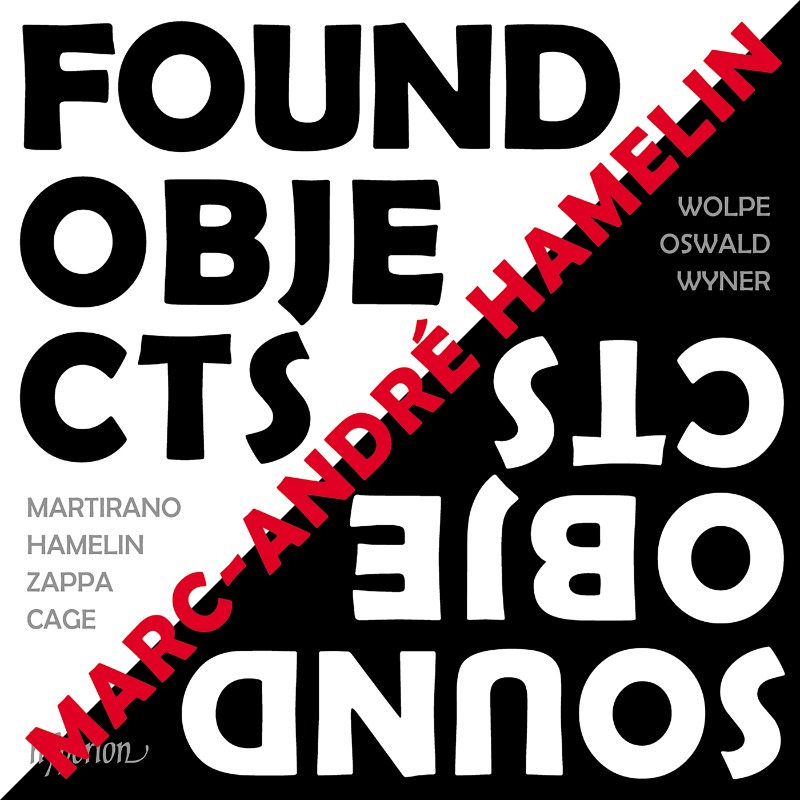
Classical Music: Found Objects: Sound Objects
Ruth is Sleeping (1982–83) – Frank Zappa, arr. Ali N Askin; Stuck on Stella (1979) – Salvatore Martirano; Tip (2021) – John Oswald; The Perilous Night (1944) for prepared piano (remastered) – John Cage; Passacaglia (1936, rev. 1971) – Stefan Wolpe; Refrain (2012) – Yehudi Wyner; Hexensabbat (2023) – Marc-André Hamelin.
Marc-André Hamelin, piano
Hyperion CDA68457
https://www.hyperion-records.co.uk/
The program opens with Frank Zappa's Ruth is Sleeping, originally conceived for the Synclavier sampling keyboard and later arranged by Ali N. Askin for the piano. Here, tonality and atonality come together perfectly, creating difficult technical problems that Hamelin resolves comfortably, as the music flows through the air and he jumps over the hurdles with ease.
Salvatore Martirano's Stuck on Stella was written, in the composer's words, "mostly to please,", and there's certainly plenty to admire in this atonal excursion. Under Hamelin's fingers, it fizzes with impressionistic colour, revealing unexpected depths beneath its angular surface.
John Oswald's fascinating Tip offers an absorbing nine-minute collage that quotes everything from Beethoven to Satie in fleeting snippets lasting mere seconds. It's a sophisticated game of "guess the tune", yet somehow coheres into an intelligible narrative—what Hamelin aptly compares to William Burroughs's cut-up novels, where disparate fragments create unexpected continuity.
John Cage's The Perilous Night, a suite in six short movements for prepared piano, demonstrates the full capabilities of this transformed instrument. Originally conceived to accompany choreography and heavily influenced by percussion writing, it's among the most significant 20th-century piano works. Despite its exploration of turmoil, anguish and despair, there's delightful playfulness in these otherworldly sonorities.
Stefan Wolpe's electrifying Passacaglia showcases Hamelin's creativity and technical wizardry across 13 mesmerising minutes of large intervals and powerful energy, culminating in a conclusion that is at once powerful and delicate. Yehudi Wyner's Refrain provides what Hamelin rightly calls "an oasis of eloquence"—a moment of expressive respite.
Hamelin concludes with his own Hexensabbat, replete with wonderful chromatic harmonies. He invites listeners to conjure their own images of this witches' sabbath as frantic passages subside into quieter moments before intensity rises again to a tremendous, hypnotic, spellbinding close.
Pianistic genius indeed.