

Andrew Palmer, Group Editor
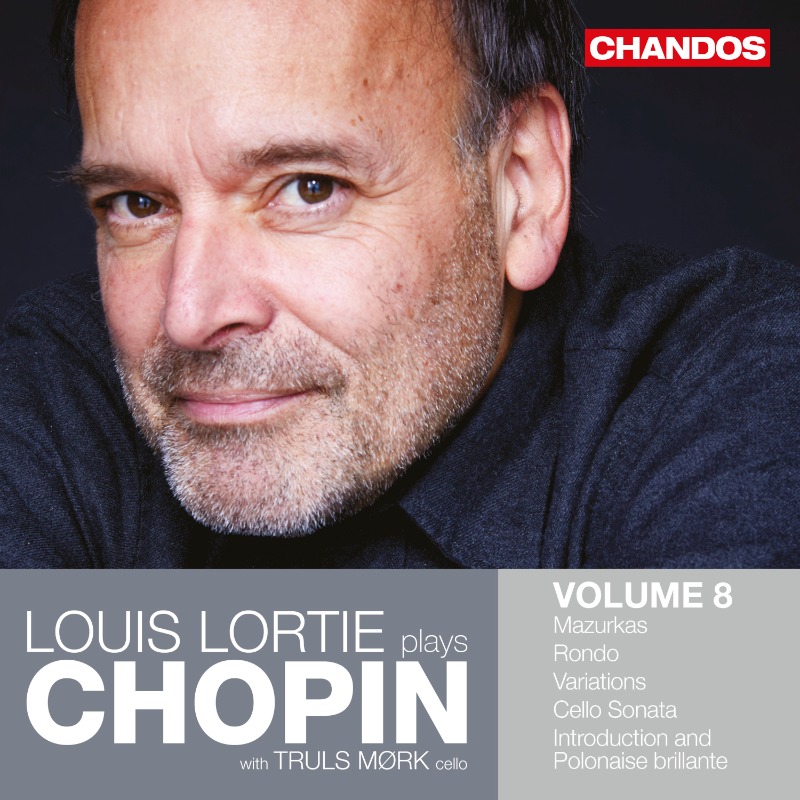
Classical Music: Louis Lortie Plays Chopin, Vol. 8
Introduction and Polonaise brillante, Op. 3; Rondo, Op. 1; Variations brillantes, Op. 12; Trois Mazurkas, Op. 50; Trois Mazurkas, Op. 56; Cello Sonata, Op. 65.
Louis Lortie (piano) & Truls Mørk (cello)
Chandos CHAN 20361
chandosrecords.net
Inspired by a visit to the estate of Prince Antoni Radziwiłł in 1829, the Introduction and Polonaise brillante, Op. 3, was written for the prince, a keen cellist, and his pianist daughter Wanda. Published in Vienna in 1831, shortly before Chopin's move to Paris, it receives a delightful performance here. Truls Mørk's cello sings lyrically throughout, and the chemistry between him and Lortie is finely judged, with Lortie accompanying him sensitively while never effacing his own contribution. The musicality of the partnership stands out immediately.
The Variations brillantes, Op. 12, takes as its theme Je vends des Scapulaires from the now long-forgotten opera Ludovic. Once again, Lortie's deft touch and skill in conveying Chopin's lyricism with expressive sensitivity is full of musicality. His graceful passagework sparkles with poetic refinement.
Chopin struggled with the composition of the Cello Sonata, taking two years, from 1845 to 1847, before finally premièring it at his last public concert in Paris on 16 February 1848. He was striving to find a 'new style' in his composition whilst simultaneously struggling under failing health and the breakdown of his long-standing relationship with the novelist George Sand. His perseverance paid off, and the sonata remains a cornerstone of the repertoire. The performance is clear and well articulated, each instrument complementing the other throughout. The textures and intonation are consistently transparent, while the emotional mood of the score comes through as the duo communicate and engage with one another.
A disc of wonderful repertoire, superbly realised.