

Andrew Palmer, Group Editor
Classical Music: Roberto Gerhard
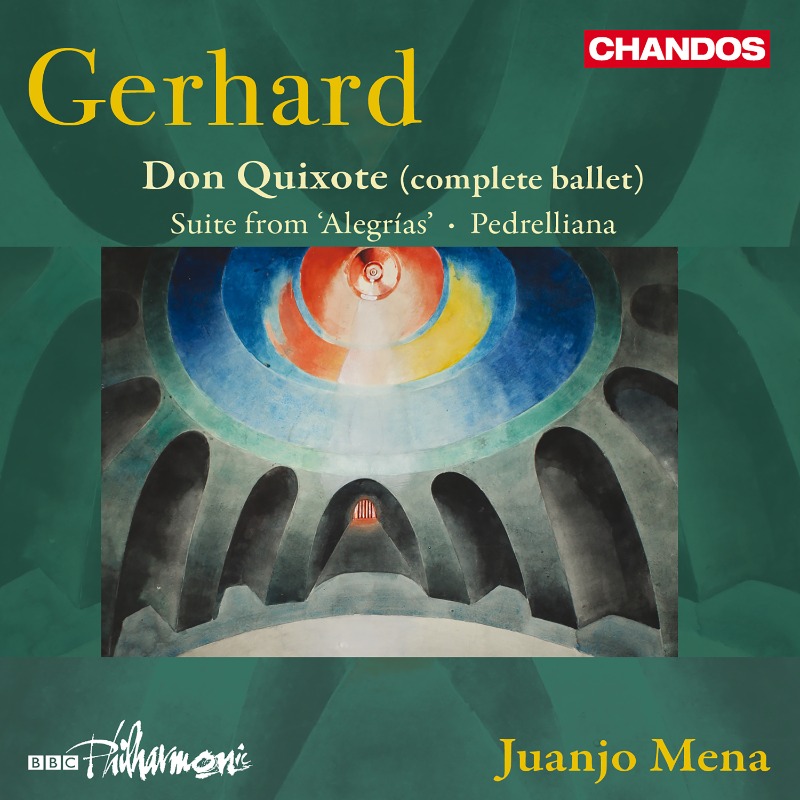
Don Quixote (complete ballet); Suite from ‘Alegrías’; Pedrelliana
BBC Philharmonic Juanjo Mena
Chandos 20268
https://www.chandos.net
Roberto Gerhard was a Catalan who studied piano with Granados and was, according to Paul Griffiths’ notes, the only Spanish composer to study with Arnold Schoenberg. It was, however, over twenty years before he committed himself to writing twelve-tone music. In the interim, his output brought a new focus and precision to the Spanish style (owing more to Stravinsky and Bartók).
Gerhard's orchestration is used effectively with an expanded percussion section and two pianos to tell stories, especially with his ballet Alegrías, originally conceived for two pianos but soon evolved into the four-movement suite heard here. Gerhard links the flamenco-inspired movements in pairs, showcasing his brilliance and humour in equal measure.
Griffiths’ notes point out that Gerhard’s ballet on episodes from Cervantes' Don Quixote evolved for almost a decade, from a work for chamber orchestra for a touring company (abandoned because of the war), via a version for radio and an expanded orchestral suite, to the work recorded here, in its full and final orchestration for performances at the Royal Opera House in 1950, choreographed by Ninette de Valois. Robert Helpmann danced the title role and Margot Fonteyn, Dulcinea.
The woodwind section is exceptional, and Mena's guidance pays meticulous attention to each orchestral detail. His ability to create allusions through music is brilliant. The different textures, phrasing and colours hold the listener’s attention. From the opening through the different scenes to the epilogue, the BBC Philharmonic expressively conveys the story.
The BBC Philharmonic skillfully employs the strings and harp in the introduction, and when the story concludes on an E major chord with a captivating harp glissando, they do so with great effectiveness.
To commemorate the centennial of his first teacher, Felipe Pedrell, Gerhard composed a three-movement symphony, Homenaje a Pedrell, which Chandos also recorded. Despite his inability to secure a performance of the work, Gerhard received an invitation in 1954 to rework the final movement for a BBC Symphony Orchestra concert, resulting in Pedrelliana.
The BBC Philharmonic's outstanding musicianship ignites the imagination, drawing the listener into the depths of a tale that depicts all aspects of culture.