

Alex Tilley, Film Critic
Film Review: Sense And Sensibility (2026)
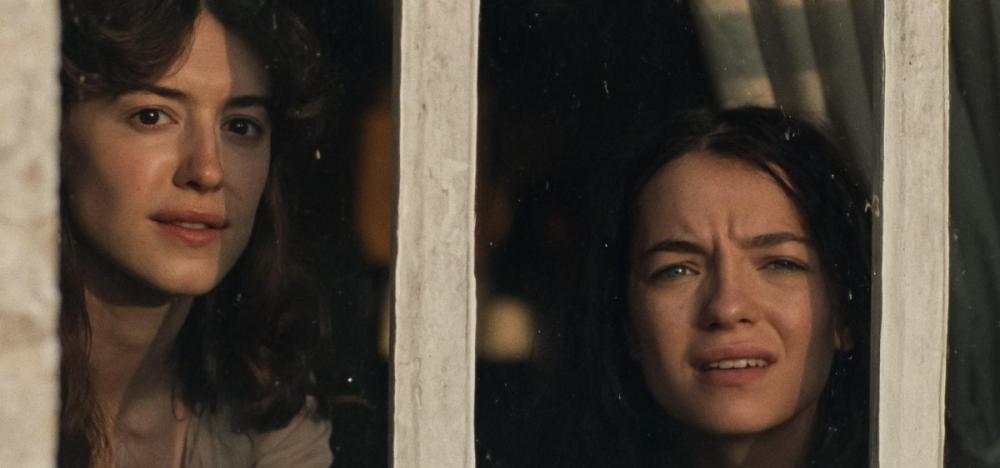
My only experience with the legendary nineteenth-century author is through a couple of live-action adaptations: the Pride and Prejudice mini series from 1995 with Colin Firth, which I liked a lot, and the Emma Thompson-penned Sense and Sensibility, also from ’95 (I wonder how many Janeites went into cardiac arrest that year).
What I appreciated most about both adaptations, and what I find cathartic about Jane Austen stories in general, is the graceful, satisfying way in which conflict is expressed and resolved through erudite language - if not muskets at dawn.
We’ve all stood under the shower the day after an argument and wished we’d said something we were too slow to think of at the time. Well, Austen’s protagonists all manage to string a sentence together flawlessly, exactly when they need to, breathing wit like a dragon breathes fire and not a stutter to be found between them.
This is why I go to see these adaptations. To see a high-stakes emotional battle fought with razor-sharp words, or smouldering glances hurled across a dance hall like explosive ordnance by a man with a chin dimple - because, with the right actors, what the characters don’t say is just as powerful as what they do.
Ultimately, all that matters is this: did Georgia Oakley’s adaptation of Sense and Sensibility have wit, engaging performances and a properly explored theme?
I’ll start with cinematography: nothing new or standout here, but it’s as visually striking as any other period romance with a decent budget thrown at it.
Typical warm hues of luxurious banquets, romanticised rural escapes and candlelit halls bask the majority of the film in a rich, golden glow. There are plenty of amazing locations here to gawk at, from manor houses to sprawling meadows.
The former is a sort of voyeuristic romanticisation of the era, framing everything in painstakingly composed medium or wide shots, making full use of the scenery, set design and beautiful actors to create the illusion that you’re looking at a living painting. The camera is usually static to maintain this illusion.
Then you have the latter, which seeks to strip away the ‘outside looking in’ feeling of the living painting and instead put you inside the era, with handheld, slightly shaky moving shots that make you feel as if you’re amongst antiquity. It has a more personal, earthy feeling to it and is much less formal.
Both can be effective, just as they can be overdone. Sense and Sensibility utilises both of these techniques more or less in equal measure, leaning slightly more towards the naturalistic, drunk fair-goer style.
There’s an immediacy and intimacy in how everything is shot that keeps the characters and their relationships feeling grounded, even while the world around them maintains its fairytale effervescence.
There are no grand operatics or flashback cutaways here. Exposition is delivered through vividly recounted tales of woe and heartbreak beside a fireplace, or through gloriously awkward conversation around a packed, excessively adorned dinner table.
The masterful balancing of the intimate and extravagant makes both elements feel more significant in their own right, refusing to overdo either one.
Both of these visual elements have their parallels in the performances. No doubt, for me, the highlight of the film was the chemistry between Daisy Edgar-Jones’ and George MacKay’s Elinor and Edward. They’re both fantastic in this.
I was fully invested in their quiet, restrained yearning. The theme of passion and its many outlets from the book and other adaptations are fully present in this version, with Elinor’s reluctance to sing her love to the birds and Marianne’s reluctance to hide hers for more than a second contrasting beautifully.
Elinor and Marianne - the latter played with a fiery vulnerability by Esmé Creed-Jones - showcase a poignant story about how different people express love and feeling, at a time where finding love was, for a woman, often the difference between leading a comfortable life or living in abject poverty.
Oakley explores the pitfalls of either being too emotionally insular or wearing your heart on your sleeve with grace and - thankfully - humour. The film is funny in a timeless way, feeling current but not modernised to a fault.
There are, however, some casting problems throughout the film which took me out of the experience. One character - who I won’t name, for those who know nothing about the story (but those who do ought to know who I mean) - felt a bit off.
This character felt like a wolf in sheep’s clothing the moment they arrived on screen, making their eventual twist seem… really not all that surprising.
Whether due to casting or direction, there were also some villains in the story who performed their villainy with the same energy as the late Alan Rickman’s Snape, which seemed at odds with the otherwise naturalistic and subtle performances from everyone else.
Besides, for every strange casting or directing decision there was an equally fantastic one. I was delighted to see Fiona Shaw, who can make a scene at least 50% better simply by being in frame, make an appearance.
Overall, I was surprised by how invested I was in this retelling of a classic Jane Austen novel. I can’t attest to how faithful it was or if the Janeites will embrace it, but for me, the emotion at its core rang true.
I laughed, I got a bit weepy, and I sincerely wanted to see the characters get what they wanted. Hopefully, if you manage to catch this during the week or so it’s still in cinemas, you’ll get what you want from it as well.
8/10
Director: Georgia Oakley
Cast: George MacKay, Fiona Shaw, Daisy Edgar-Jones, Frank Dillane, Catriona Balfe, Esmé Creed-Miles