1:00 AM 6th December 2025
How Memory Takes Shape
The Shape of Memory began as a personal attempt to understand how our experiences settle inside us and shape the people we become. I grew up thinking about the stories families pass down and the ones we learn to carry on our own. As a visual artist and art director working in Sheffield, I wanted to explore those ideas in a way that felt honest and accessible.
The project started with curiosity rather than conclusion. I became interested in how memory works beyond language. I began to notice how certain colours or textures reminded me of specific moments, emotions or people. Digital painting became the tool that allowed me to explore those ideas with freedom. It gave me enough flexibility to shift between clarity and ambiguity without losing emotional intention.
![Jessica Ajuyah]()
Jessica Ajuyah
Colour played an important role throughout the exhibition. Warmer tones connect to themes of belonging, comfort and shared experience. Cooler ones reflect quieter thoughts, distance or internal reflection. During the exhibition, visitors often spoke about how certain colours reminded them of their own lives. Their reactions made me realise that people naturally carry their own stories into the room, and the work became a prompt for them to consider those memories more closely.
Repeated motifs appear in the series, including flowers and elements drawn from everyday life. They represent moments of growth, change and emotional grounding. Some images feel bright and open, while others turn inward. They form a rhythm across the exhibition that mirrors the way memory shifts between sharp detail and gentle blur.
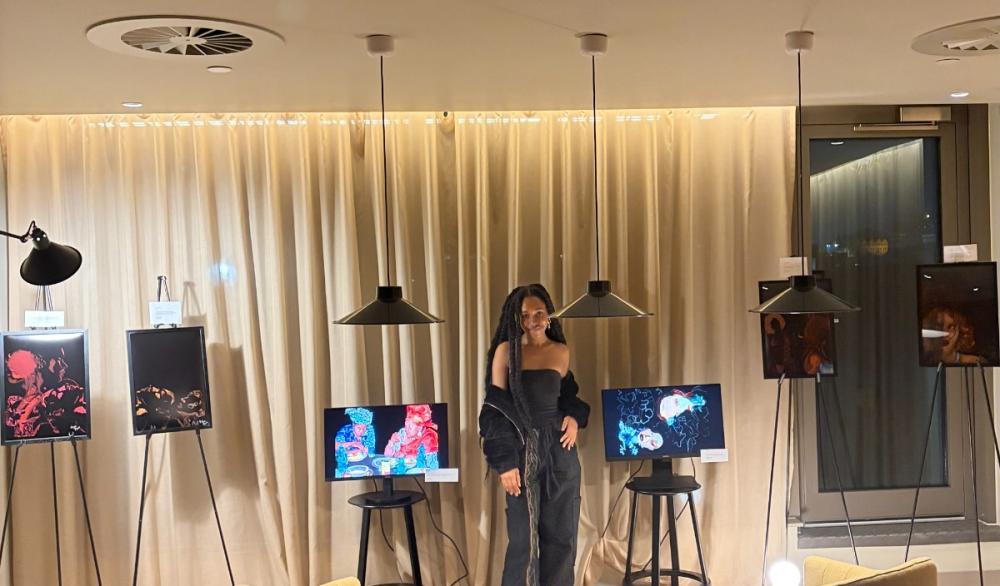
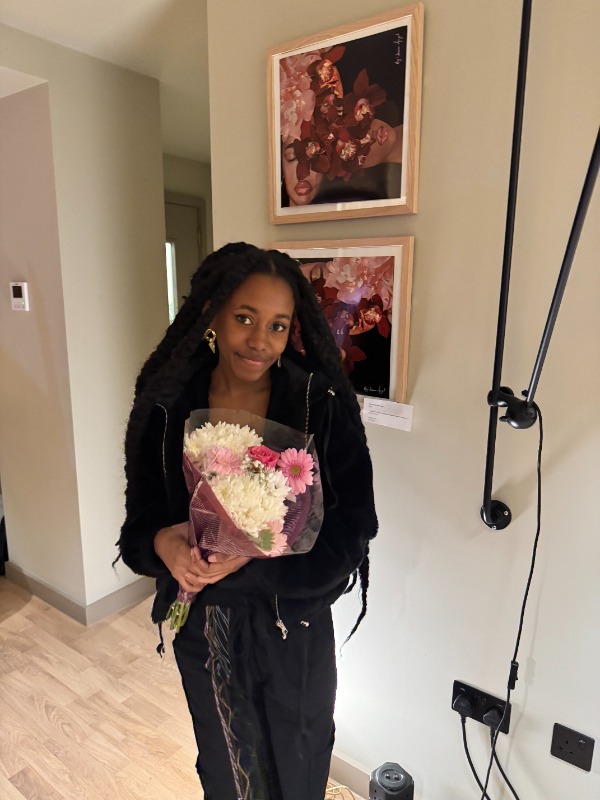
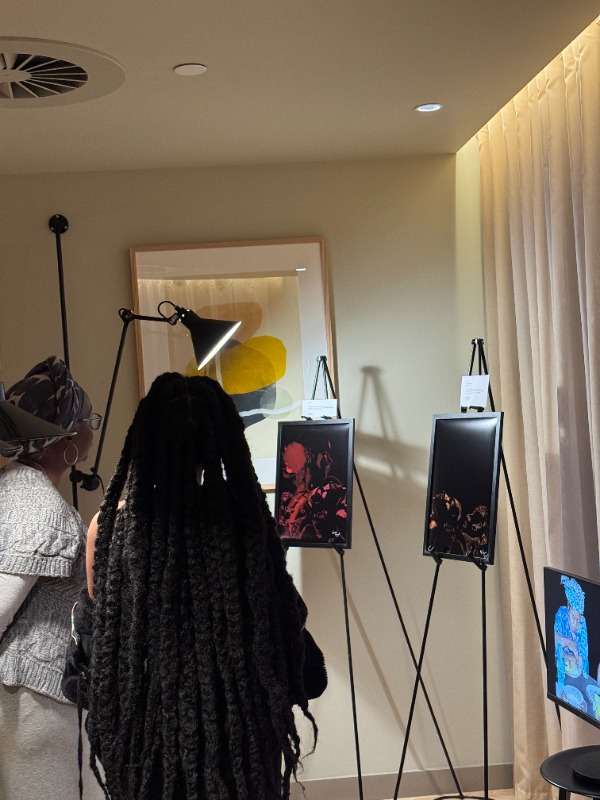
The way the work was displayed was important to me. I wanted anyone who entered the space to feel unhurried. Each piece had room around it so visitors could spend time with it without feeling pressured to move quickly. This created a quieter atmosphere and encouraged people to engage in their own way. On the opening night, several visitors shared personal stories with me. Many spoke about their families or about moments from childhood. These conversations became one of the most meaningful outcomes of the project. They showed that memory may be personal, but the experience of reflecting on it is something we all share.
The creation of The Shape of Memory involved a lot of private process. I kept journals, explored early sketches and experimented with colour combinations until something felt right. Much of the work changed shape as I spent more time with it. I included some of the development images in the exhibition so people could see that process. It felt important to show that these pieces were the result of an evolving process rather than a finished idea. They changed shape over time, just as I did.
I also spoke about the project on the DMC Hour podcast. That conversation gave me the chance to explain the emotional starting points in a way that was more conversational. It allowed people to understand the project beyond the visuals and connect with the ideas behind it.
![]()
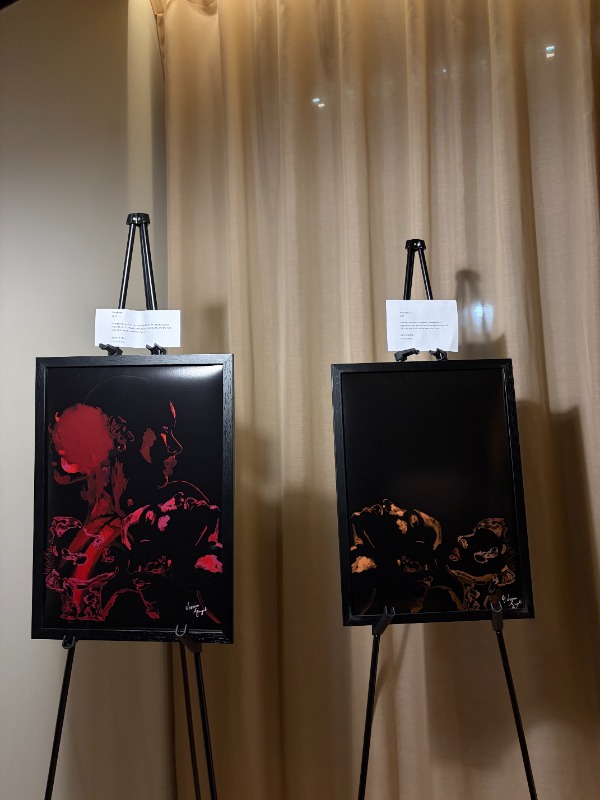
Certain works from the exhibition carry a more intimate emotional focus, and Raspberry and Muted Bloom reveal this most clearly. Raspberry reflects the process of growing into yourself with honesty, even when parts of you still feel imperfect. Its bright pinks and vivid tones highlighting the beauty that lives within the complexity of becoming who you are. Muted Bloom sits in deliberate contrast. It explores what happens when a person becomes shaped by external voices and expectations, until the version they present no longer feels true. In this state, the individual becomes harder to recognise, both to themselves and to others, and the quieter, more authentic parts of who they are begin to fade. Showing these works side by side emphasised the distance between self-expression and self-erasure, inviting viewers to reflect on where they find themselves within that spectrum.
In All Her Forms reflects on presence and identity, considering the quiet strength found in simply being seen. A Summer of Rediscovery speaks to growth and renewed confidence while also holding the lighter, joyful energy of change.
Upon reflection, The Shape of Memory has influenced the direction of my practice in ways I did not fully expect. It has shown me the value of slowing down and creating space for reflection. It has also reminded me that people are drawn to work that acknowledges emotion without overcomplicating it. My hope is that the exhibition encourages viewers to spend time with their own stories and to recognise how their memories have shaped them.
Anyone who wants to explore the visual side of this project can find more of the work through my website, https://jessicaajuyah.com/theshapeofmemory/, where the themes continue in ongoing pieces.