
12:00 AM 14th July 2026
In Conversation With Headwreck
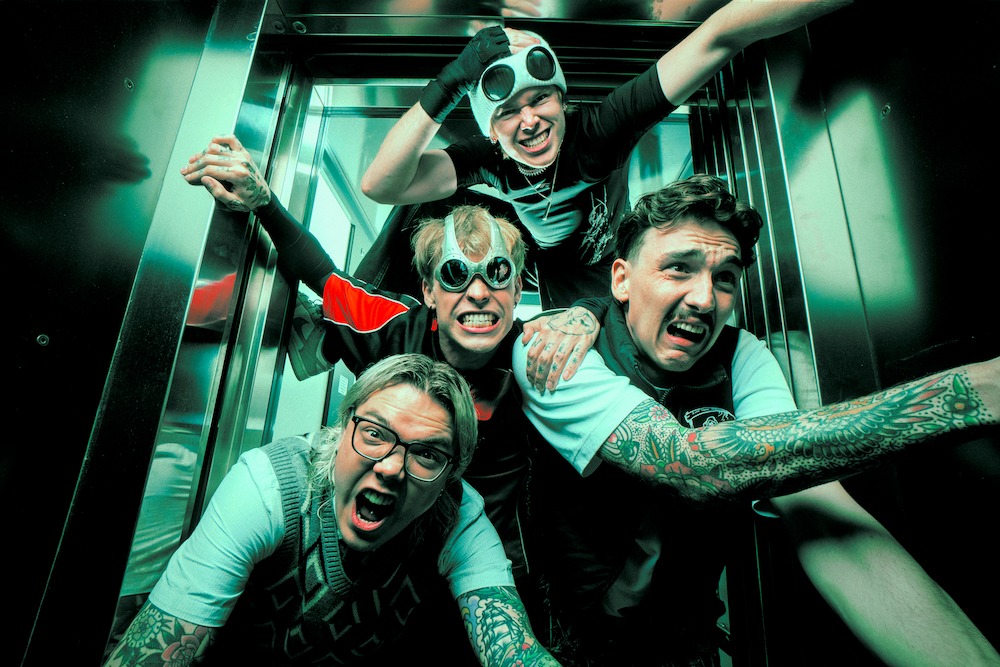
I think for us, Empire is super exciting because it gives us the chance to try and finally pioneer something new as an up-and-coming metal band. I think when you're a smaller band, you don't really get the chance to try something a bit different or new. So I think Empire opens up the avenue to try different collaborations and try to almost embrace the genre bend a bit more than a standard, typical record label.
Not that there's anything wrong with your big labels in that world, but I think for us it's cool to be backed by a label that has such a different influence, can give us different input and allows us to be creative within different spaces and genres.
You've spoken about Empire understanding your vision from the first meeting. What is that vision in your own words, and where do you want to take Headwreck globally?
I think the vision for Headwreck is to just have fun. At the end of the day, we were a band for quite some time, and we didn't really see the results we wanted to yield. And I think having fun for us just then became the objective. We just kind of dropped our guard a bit. We started writing music that we had fun writing. We started doing visuals that we had fun making. And I think at the end of the day, when you start to try and tour like you would dream of touring, you find that having fun goes such a long way. You don't have to keep up any act or facade. It's all very organic and natural, and you can just be yourself, which goes a long way.
The basic answer is to take Headwreck worldwide, but ultimately, we want to connect with as many people as possible and inspire them to be creative, have fun, or provoke some type of feeling with our music. Whether they relate to certain lyrics or whether they relate to a chorus or a fun section or a heavy part or a rappy part, we just want people to connect to it and just realise you can do what you want, and just because we're a heavy band, you don't just have to scream and be tough. You can scream and have fun, because why not?
Being described as having the ambition to break on a global level is a big statement. Did international success always feel like the goal, or has that ambition grown as the project has evolved?
100% has evolved as the project has grown. We talk about this all the time within the band, but I feel like for ages we've dreamt of touring internationally, so when we were actually touring Europe, or at Download Festival, for example, it was truly just a dream come true. And I think success is such a hard thing to manage. It feels surreal because to a lot of people, we've achieved so much already that, like, we grew up in the scene with, but to us, it feels like, "Oh, we've now just got a taste of it, so we just want to keep playing bigger shows and playing different places in the world and go back to different spots in the world we have already played."
So, I think the international success was always a dream, but I guess it never truly felt like we could achieve it. It was such a far-away thought of like, "We want to achieve this one day." But then once it came to reality, we were like, Oh my God. This is what we have always wanted to do, and that is when it all finally clicked for us.
It just took a long time for us to finally believe it was happening, and it's true. So, now that we've done our first international tour, we're hungry to go to America, return to Europe and the UK, and keep travelling to new spots, playing bigger shows, and cementing more fans.
Headwreck's sound pulls from nu-metal, metalcore, alternative, and electronic influences while still staying distinctly your own. How intentional has that genre blending been from the beginning?
Honestly, it hasn't been super intentional. When we sat down to write the first batch from Attitude Adjustment, it wasn't, "Oh okay, let's try and be quirky. Let's try and be genre-bending and defining." As I said before, it's the name of the game to have fun. And I think it only became genre-bending because we all had different music tastes, and we all kind of pull from different inspirations and different spots.
So, I think as soon as we started properly collaborating and like throwing ideas out for vocal parts or melodies or lyric references or just, "How about we try this in a song?" I think that's when all of the kind of genre-bending stuff started to happen because it was just naturally our influences; in our heads, we got different ideas of where things could go.
Then it just kind of snowballs from there. It's not necessarily a sit-down and be like, "Oh, I want to be like this band, and then this band, and this band did like a cool genre swap." It's more like, "Oh yeah, this is where I'm feeling." This is naturally where it lies." And then I guess there's a vibe in the room with it, and we go, "Okay, that's kind of interesting. Let's roll with it."
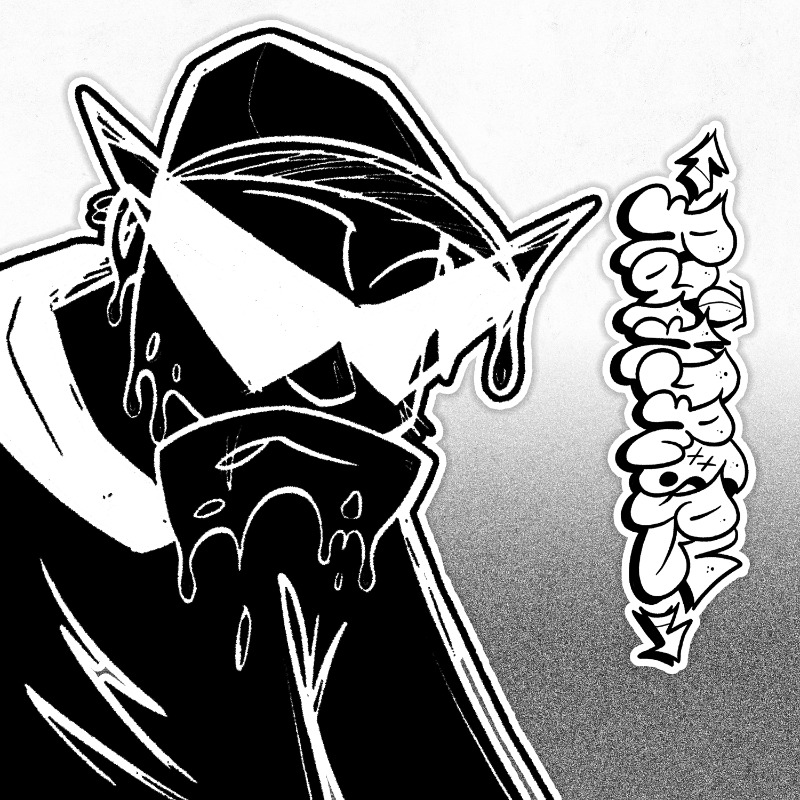
Yeah, I think the creative control for Headwreck is very, very important. Like when the project started, it wasn't important for us at all. But then, from releasing Attitude Adjustment, I feel like the brand and the identity of Headwreck became almost as strong as the music itself, and therefore, they both went hand in hand.
The creative control for me, and doing the music videos and designing merchandise and stuff, only started because we didn't have enough money to do what we wanted to do and keep up the quality of music videos we had previously done.
So, I just kind of took it upon myself and did a DIY approach. I was like, "Oh, I'll figure out ways to film these videos. I won't charge anything." And we were able to work within a budget that worked for us, and I guess that kind of sparked a fire, and somehow, luckily for us, it worked in our favour.
I think after we did the first video for Buzsaw, we felt kind of inspired, like, "Okay, this actually turned out really cool, and I think this captures almost like lightning in a bottle, so let's keep rolling with it." I think as time has gone on, the brand identity for Headwreck has grown so much, but I guess we feel very close to it, and sometimes people can jump in on it and they understand, and we trust them with the vision, but the majority of the time, we would rather just keep it all condensed to our little minds, because at the end of the day, the the branding of Headwreck is Headwreck. We are the branding of Headwreck; there is no other branding.
You've built such a strong visual identity around nostalgia, chaos, and early 2000s aesthetics. What role does the visual work of Headwreck play in shaping how fans connect with the music?
I think for me, at the end of the day, I've always wanted to create visuals that feel more engaging than just a band playing the song, the band playing the breakdown. I've always wanted different scenes from the music video to feel more memorable, whether that's a weird scenario like Low Blow when we're in zoot suits or "Raindrops" where we're flying through the sky or we're in just like this, like a white room, just posing for the camera.
I almost favour the band not performing with their instruments over the band performing with their instruments. To me, it just shows off way more character, and at the end of the day, I kind of view Headwreck as almost like a boy band. I want each person to have their own strong identity, and I want each person to fit in the world of Headwreck. I don't want it to be just this person who only plays guitar and that's it.
I want them to really just shine through their character and just be themselves as much as possible.
Raindrops is your first new release since Attitude Adjustment. Did you approach this single as a continuation of an era, or does it hint towards the new chapter?
We definitely think of Raindrops as a bridging single. I think it has some old flavours from Attitude Adjustment, but once again, it kind of pushes the envelope a little bit further, and it's like, "Oh yeah, we'll double down on some more rapping parts, here's a heavy part, here's a really catchy, infectious chorus," and stuff like that. I think it's just felt right, like the perfect bridging song between the two worlds. It's not too vastly different, but it definitely opens up the world for more.
The lyrics of Raindrops explore toxic relationships but are delivered in a fun way. Why do you enjoy pairing darker themes with higher energy, almost playful production?
I think it's because, naturally, when we write choruses, it's very easy for us to tap into a bit more of those realistic feelings and those emotions of human connection.
We've always talked about the human connection, and I think it's almost fun to put a juxtaposition on it, but just trying to throw back to things that make us laugh and make us smile and realise that, like, yes, situations may be heavy, but they don't always have to weigh so hard on you.
There's always a bright side to the dark. So, I think we always like to try and shed light on it and make our lyrics have meaning and be something that you can attach yourself to and apply, but it doesn't have to be the only meaning to it. It can still feel fun and still make you feel happy.
Triple J Drive premiered Raindrops to an immediate buzz. How validating is it to see that kind of instant audience reaction to the new material?
Honestly, we felt a buzz for it, but we were unsure if it was a strong follow-up to Attitude Adjustment. I think once you release music and you see how it's responded to and reacted to, you put it up on a pedestal.
I think with Raindrops, we were scared that it wasn't going to be received well and people wouldn't like it and people would love Attitude Adjustment more.
I think the Triple J buzz really helped with us being like, "Oh, okay, no one said anything negative. Okay, this is good." And then as soon as we started playing it live, we were like, "Oh, okay, like, people really like this. This is very cool. This song works live very well, and people keep streaming it." So, we were pretty chuffed.
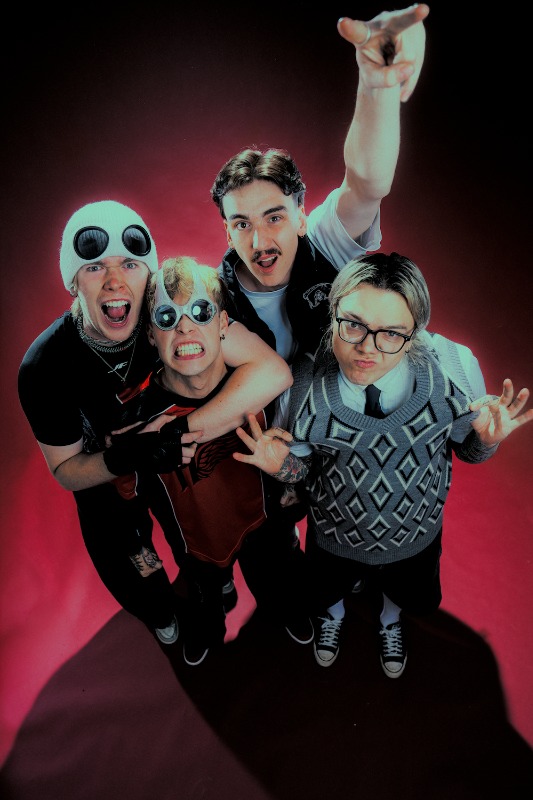
It was very surprising nonetheless, and honestly, we were all shocked by the placement considering that it was all just like independently done.
It does give us confidence, but I think we never get cocky with these types of things and go, "Oh yeah, next time we do one, we're going to like outdo ourselves," and stuff like that.
I think we'll always take it as it comes, but definitely for our next release, we plan to try and have that ARIA number one. I think that would be an absolute dream come true if we were able to secure that. Being Australian, I feel there is a wide and large music scene here, but it is a lot smaller to other parts of the world, and I think our parents and our colleagues, our friends and anyone we talk to would really understand the severity of it, which for us would just mean the world: that we can put it in, that we can show them what our music has done and how our music has connected to people.
You've supported bands like Northlane, The Amity Affliction, Polaris, and Thornhill before selling out your own headline run. What did those earlier support slots teach you about building your own live show?
I think touring with those bands really taught us confidence. I think for a long while we would be scared to tell the crowd to move or tell the crowd to participate, but we learned from those bands it's really about owning your craft, and I don't want to use the word 'selling' it to them, but it's really about backing yourselves 100% and making sure that even if everyone doesn't get off their feet, you still give them the best show you possibly can.
I think doing those support slots really made us understand, like, "Okay, we're here to play with the big bands," so it's time for us to step up our game a bit and try to match their energy and almost make our opening slot feel like those bigger slots.
Your recent debut headliner was sold out completely. Was there a particular moment on the run where it really hit you?
Yeah, I think Sydney was pretty crazy. I remember going out to get food, and we could only leave out the front door, and this was maybe about 30 minutes before the doors opened. When I walked out, I remember there was a line down the whole building of the block. There was this gigantic line, and everyone in that line was staring at me with my spiked hair, and it was this very weird feeling of I didn't know what to do, I didn't know how to react, and I didn't believe any of those people would know me. But as I walked down, more and more people wanted to say hello, take photos and talk. So, that was pretty crazy.
But I think just Sydney in general, being in a big venue capacity-wise, I think we're really blown away that we were able to sell that one out because all the other venues were like less than half that size. So, the fact that so many people in Sydney showed up, when we felt like we couldn't even sell like 100 tickets, was very, very insane, and just the reaction and the response and the way they participated was crazy.
You've built a loyal fan base with a very distinct identity and community around the band. What do you think fans connect with deeply with Headwreck right now?
I've touched on it a lot within this conversation, but I think it's all just the authenticity of it and the genuineness of it. I think in society, everyone is really craving people to be real nowadays, and when you go on Instagram, there are like 100,000 people telling you, "When I was 19, I became a billionaire, and I dropshipped and blah, blah, blah, blah, blah, blah." There are all these influencers, there are all these people, and I feel like on social media everyone's always trying to prove how cool they are and what they're doing. I feel like the same thing applies to music. People try to act mysterious, people try to act cool and tough, and there's always this huge barrier between the fan and the artist.
I think with Headwreck, we like to break down that barrier and make sure that we're the same as them, because at the end of the day, we all just are human. All of this for us happening right now is very crazy and surreal, and it's all thanks to anyone that does check out our music. So, I think for us, we're always about trying to break down that barrier and trying to let anyone in and just making sure people have fun and letting them know, like just be yourself; have fun, do your thing. We'll do our thing, and, like, at the end of the day, just be happy.