

Andrew Palmer, Group Editor
Lepers, Book Of Job And A Festival That Isn't Afraid To Show Its Workings
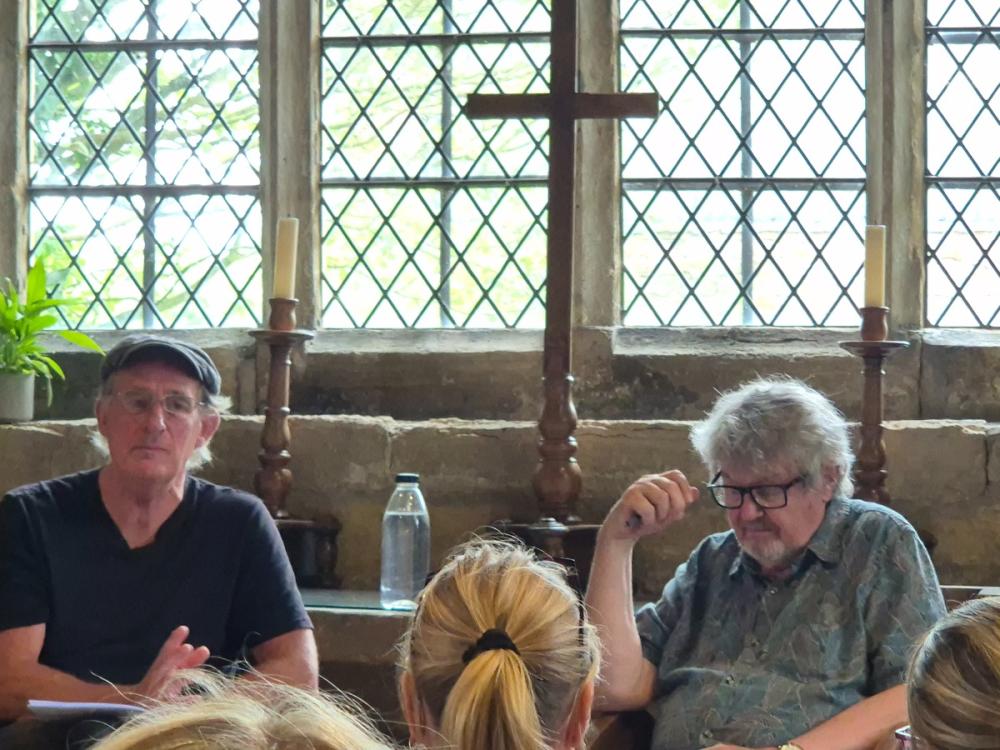
(L-R) Andy Croft & Paul Mills inside Ripon's leper chapel
Photo: Andrew Palmer
As a music critic, I love attending classical programmes, but they have to be innovative and alert to their audience—something the excellent Harrogate Festival, just up the road, manages with aplomb. Ripon, by contrast, still has one foot in the past when it comes to classical music. The theatre festival, though, hits the nail on the head.
This year's fifth festival features approximately 160 events, and none of them can provide a comprehensive overview of the entire festival. But a festival reveals a good deal about itself in what it chooses to open with, and Ripon opened not with a safe, finished crowd-pleaser but with something still being written – literally.
Outcast is a new play by the Ripon writers Andy Croft and Paul Mills, brought to life brilliantly by the York-based Out of Character Theatre Company, whose ensemble draws on members with lived experience of mental ill health. It is set among a community of lepers scraping out an existence on the margins of medieval Ripon, and it announces a welcome new strand for the festival: a commitment to developing new writing and creating opportunities for artists across Yorkshire and the North East.
The afternoon began, fittingly, at St Mary Magdalen's Leper Chapel, where Croft and Mills talked us through the history and politics underpinning the piece—poverty, control, and environmental collapse—themes that map with uncomfortable precision onto the present day. From there, the audience decamped to the Arts Hub (surely it is time someone rebranded it the Ripon Arts Theatre; the name would do wonders for both clarity and tourism) for a scratch performance of selected scenes, followed by a discussion that will directly shape where the writers take the play next.
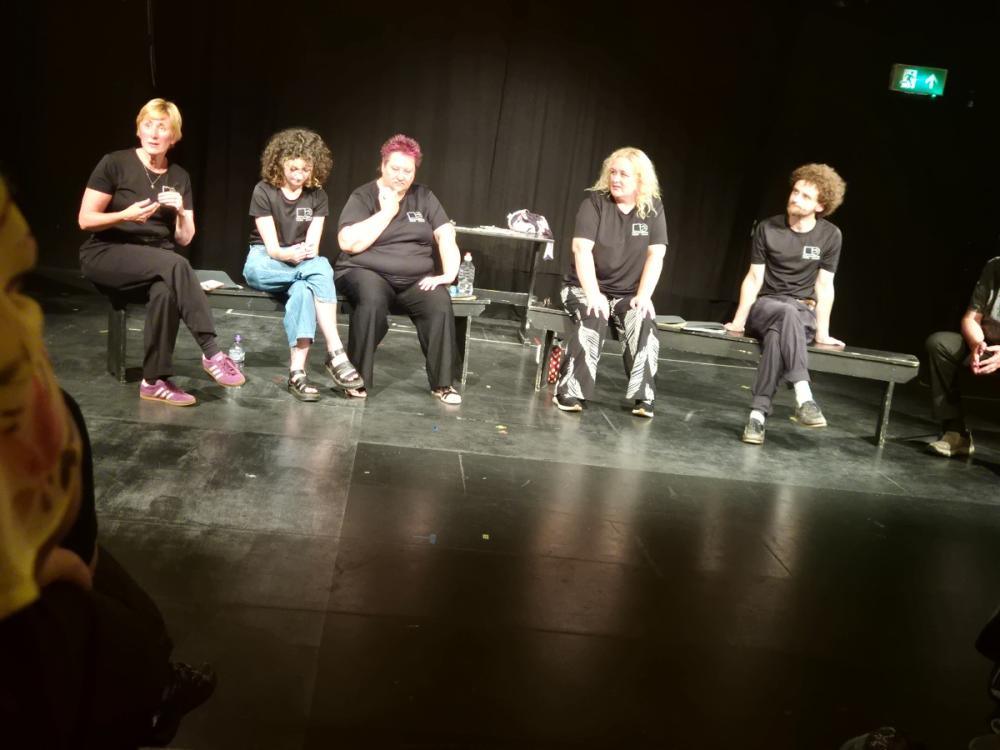
Out of Character Theatre Company in the Ripon Arts Hub
What struck me most was the range the afternoon covered in barely two hours: comedy sat alongside pain, desire alongside shame and endurance, and the writers drew a startling parallel between their leper community and the Book of Job — a wealthy, righteous man stripped of everything by a wager between God and Satan, left to wrestle with the question of why the innocent suffer. It was a heavy weight for a scratch performance to carry, but it carried it.
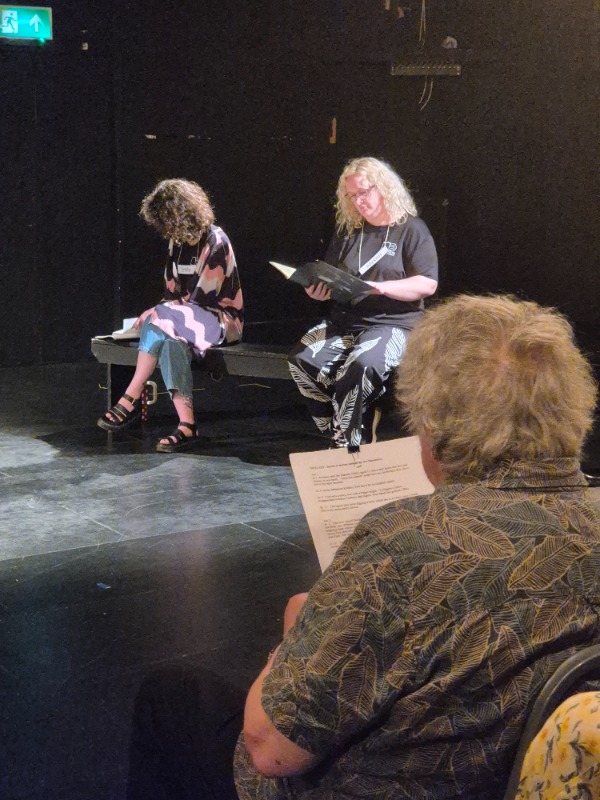
Paul Mills with the cast
It is, in short, exactly the kind of theatre I want to see more of: expert, collaborative, and unfinished in the best sense, with writers, actors, and audience all working together on what the piece might yet become.
Whether Outcast itself ever reaches the stage in finished form is, in a sense, beside the point of Sunday's afternoon. What mattered was the demonstration of trust — in the writers, willing to hand over work they had nursed for two years and ask a room of strangers what should happen to it next; in the actors, reading scenes cold and thinking aloud about make-up and prosthetics they hadn't yet settled on; and in an audience invited not merely to watch but to help decide.
Tickets for the festival's bigger productions later in the week are already selling well, so this was never a case of Ripon needing to hedge its bets. It was a deliberate choice: to open with a stage whisper rather than a roar, and trust the audience to lean in.
Ripon Theatre Festival's fifth year has hundreds of events and productions still to come, most of them a good deal louder than this one. But on this evidence, it's the whisper that will stay with me longest.
More articles in this series...
A Stunning Conclusion: Romeo and Juliet Brings The Curtain Down On Ripon Theatre Festival 2026No Town Of Culture Title, But Ripon Already Knows What It's WorthVoice In The DarkBreathless In Ripon: Stephen Smith's One Man Poe Is Gothic Horror At Its Finest.Seeing Red — And Loving Every MinuteA Ghost Speaks, And A Cathedral ListensCurtain Rises On Milestone Fifth Ripon Theatre Festival With Two Powerful New PlaysDiscovering The Slave's Ghost Letter That Became A Cathedral PlayAll Singing, All Dancing, All AmberRipon Theatre Festival Boosts Youth Engagement At RTF26