
Claire Clarke, Dance Correspondent
Northern Ballet's Nutcracker: Tradition Meets Modern Reinvention
![Alessia Petrosino in The Nutcracker
Photo: Emily Nuttall]()
Alessia Petrosino in The Nutcracker
Photo: Emily Nuttall
For many,
The Nutcracker is as much a part of Christmas tradition as mulled wine, mince pies and decorating the tree. Being lucky enough to grow up with an annual family trip to the ballet, for me, the Christmas season doesn’t really begin until we take our seats in the auditorium.
With all the major UK ballet companies offering their own interpretations of
The Nutcracker, there are plenty of versions to enjoy. But considering this proliferation, it would be easy to assume that the repetition year on year is dull and predictable. Far from it:
The Nutcracker has been undergoing a reinvention over the last few years, keeping it fresh and relevant for modern audiences.
As a two-act ballet,
The Nutcracker has a definite change of pace between the acts. The first encompasses the traditional story-telling which Northern Ballet does so well. Everywhere you look on stage, you’ll see characters living out their own narratives: aging grandparents, serving staff with their private jokes, adult guests politely chatting, children excited to spend the evening with their friends, running wild and getting under people’s feet.
![Harris Beattie and Bruno Serraclara
Photo: Emily Nuttall]()
Harris Beattie and Bruno Serraclara
Photo: Emily Nuttall
One of the highlights of Northern Ballet’s production is undoubtedly the Mouse King. His insouciant irreverence is in stark contrast to the toy infantry’s wooden precision. The Nutcracker is technically the hero of the hour (or is it Clara with her well-aimed missile?) but honestly, I was rooting for Bruno Serraclara’s Mouse King every time. Blending fun and mischief, baring his faintly obscene naked pink belly and regularly waving his backside in the face of his enemy, his devil-may-care attitude makes Northern’s mouse king stand out from that of all the other ballet companies.
Another highlight is the dance of the French dolls in act one. The dancers’ stiffness is so realistic that I’ve seen confusion overtake younger children as they try to work out if these are actually real people. Sena Kitano and Filippo Di Vilio somehow managed to render human emotions like humour, ardour, and disdain in these roles while still being utterly convincing as clockwork dolls.
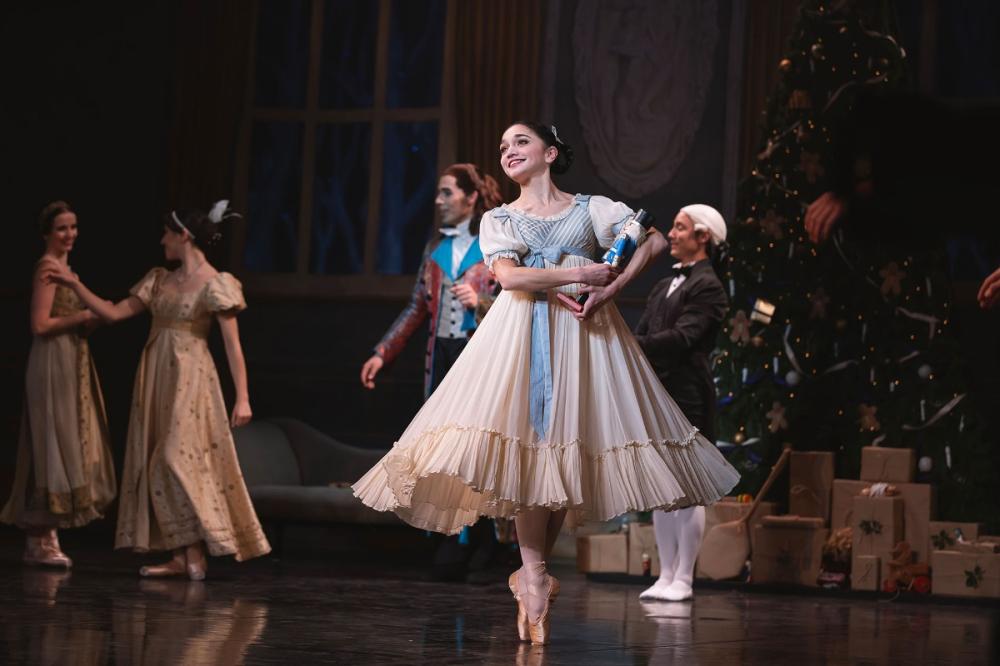
![Rachael Gillespie in The Nutcracker
Photo Emily Nuttall]()
Rachael Gillespie in The Nutcracker
Photo Emily Nuttall
Clara’s relationship with her infuriating brother illustrates her youth and relative impotence as he torments her at every opportunity. Seeing her ridden roughshod by her sibling, we share her sense of frustration and injustice, but Drosselmeyer’s strange gift is a catalyst for Clara’s growth. Her immediate love for the Nutcracker kindles a sense of responsibility and, ultimately, power as she steps in to help defeat the Mouse King. As the Nutcracker is transformed into a living prince, Clara experiences the first stirrings that initiate her journey from little girl to young woman. Rachel Gillespie shines as Clara, revealing moments of blossoming maturity whilst retaining a sense of innocence, delight and wide-eyed wonder throughout.
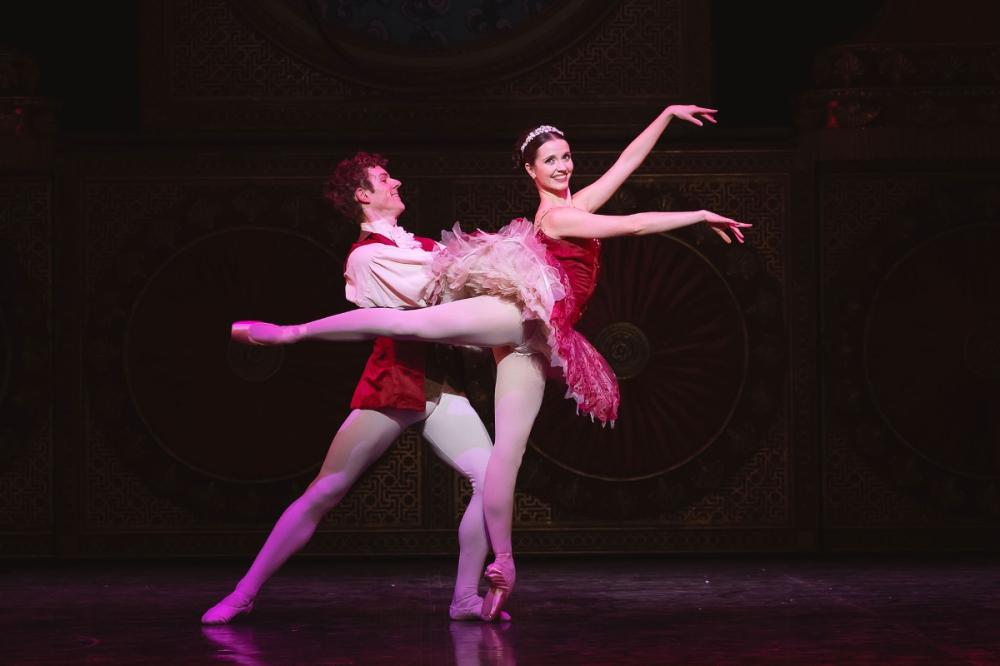
![Dominique Larose and Jonathan Hanks in The Nutcracker Photo: Sophie Beth Jones]()
Dominique Larose and Jonathan Hanks in The Nutcracker Photo: Sophie Beth Jones
The gorgeous pas-de-deux between Clara and her prince at the end of act one is as moving as any from more serious ballets such as
Swan Lake or
Romeo and Juliet, and Northern’s staging, complete with gently swirling snow, is one of the most visually arresting parts of the ballet.
Having been whisked off to the Land of Sweets in a magical sleigh, Clara and the Nutcracker are treated to a series of divertissements in the second act. These include a number of national dances that have become problematic with their inherent cultural stereotyping, as well as suggestions of misogyny, particularly in Chinese and Arabian dances.
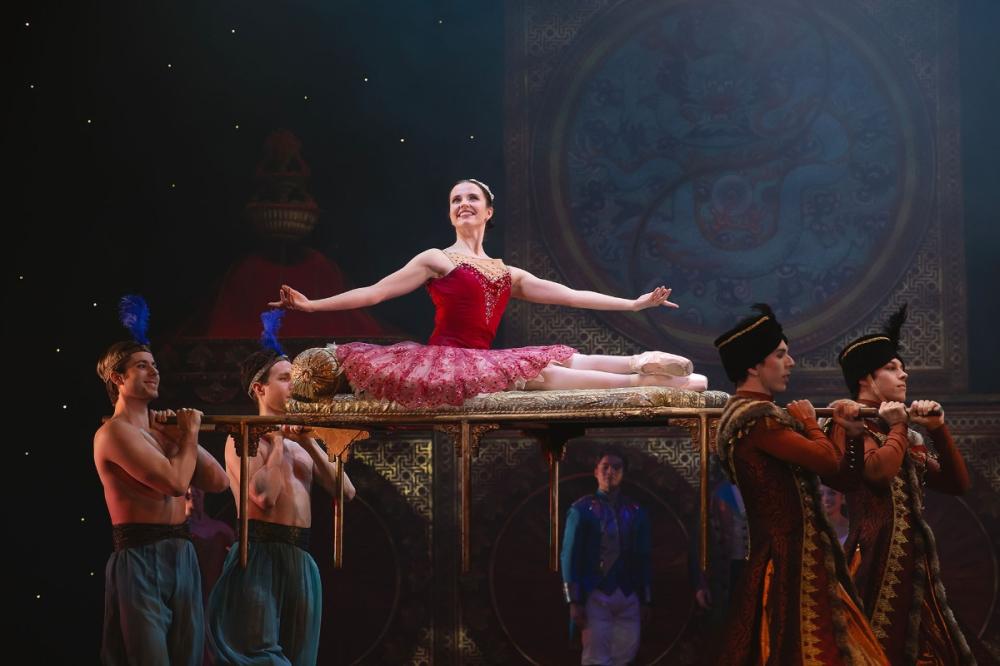
![Dominique Larose in The Nutcracker
Photo: Sophie Beth Jones]()
Dominique Larose in The Nutcracker
Photo: Sophie Beth Jones
Directors and dancers regularly reinterpret choreography to ensure that productions are inclusive, accessible and reflective of modern sensibilities. This must be an ongoing challenge for artists - how do you stay true to the original story while acknowledging that it includes elements that are no longer acceptable? In Northern Ballet’s current production, David Nixon has revisited his original choreography and the national dances have been renamed and reimagined. The new insertions have moved away from the national and cultural predecessors entirely, focussing instead on the elements: Fire, Water, Air, Earth and ‘Quintessence’.
With so many versions of
The Nutcracker on offer, it makes sense to do something completely different, but making such significant changes to much-loved and eagerly anticipated dances also carries risks. The rationale behind reviewing the choreography of the national dances is compelling - we can’t hide behind tradition to play out entrenched stereotypes just because it’s how the original was written. Yet Tchaikovsky’s score clearly references musical styles from around the world and each of these nations has its own traditional dance forms. There’s still an opportunity to choreograph pieces that allude to these styles respectfully, and I personally missed these pieces within the ballet.
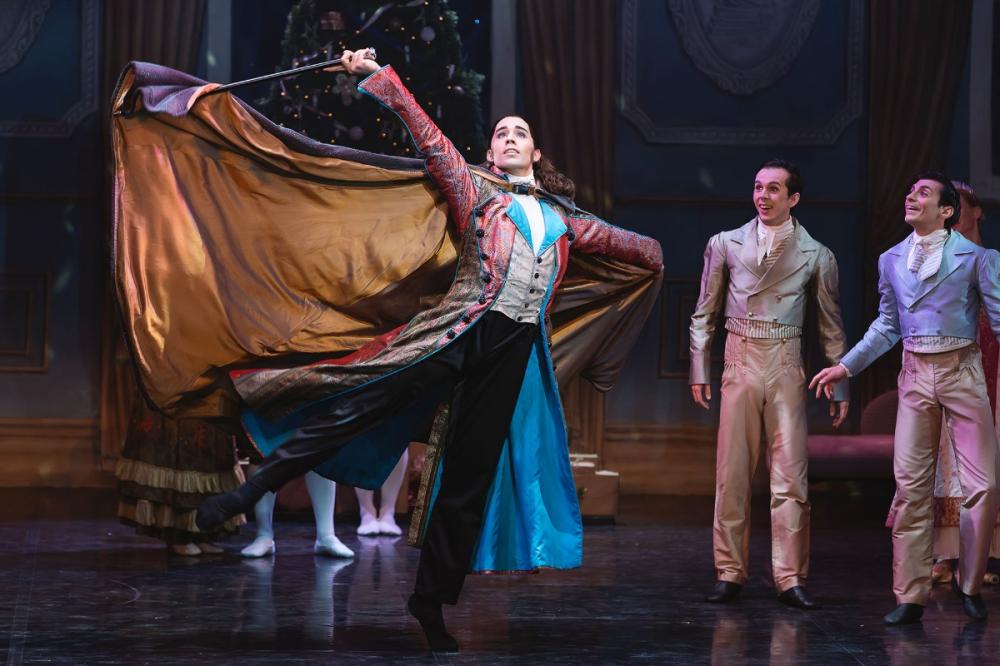
![Harry Skoupas
Photo Emily Nuttall]()
Harry Skoupas
Photo Emily Nuttall
Perhaps the measure of success is whether the new piece draws one in to the extent that what’s lost feels negligible in relation to what’s gained in its place. This wasn’t the case for me; I was genuinely saddened by the loss of the sinuous beauty and simplicity of Nixon’s Arabian dance, and gorgeous as it was, the replacement Water sequence just didn’t hit the spot. But such things are entirely personal, and I have no doubt there will be plenty of audience members who will be completely satisfied with the changes.
However you feel about the updates, the whole ballet still holds together as a thrilling ride from Regency-era drawing rooms through snow-filled skies to a land of excitement and wonder. It’s a perfect family experience that encompasses magic and adventure, the domestic and the supernatural, all centred around a sweet coming-of-age story.
At the end of the ballet, Clara is still in many ways a little girl, but her transformation has begun. As the curtain comes down, we know that, far from this being the end of the story, for Clara, it’s just the beginning.
The Nutcracker is at Leeds Grand Theatre until 4 January 2026.
For more information and tickets, click here.