

John Kitching, Writer
Small Island Big Story
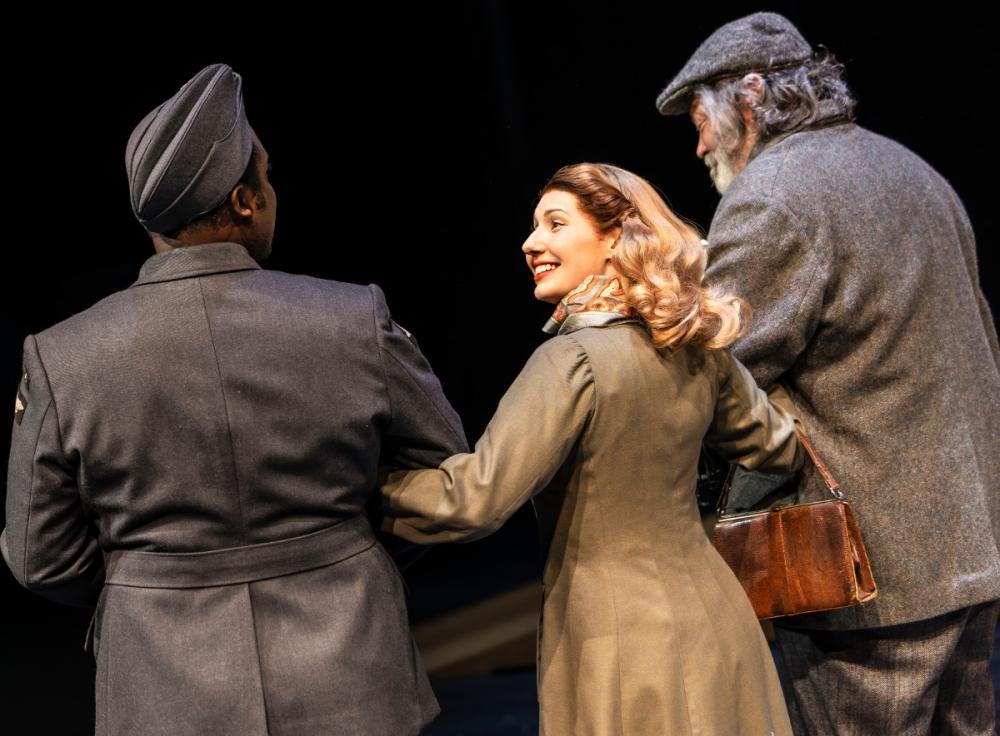
Daniel Ward (Gilbert), Bronté Barbé (Queenie) and Paul Hawkyard (Arthur).
Photo: Pamela Raith Photography
From an original novel by Andrea Levy, the tale has been on a journey itself. From a multi-award-winning novel to the stage first at the National Theatre, then a BBC drama and finally this new adaptation for the stage by Helen Edmundson and co-produced by Leeds Playhouse, Birmingham Rep and Nottingham Playhouse with support from Actors Touring Company.
Matthew Xia directs a cast of fifteen confidently through the story with compassion, finding endless humour in even the darkest moments of racism, with the audience laughing along at the jokes, many of which were comments on attitudes of the time. Simon Kenny has designed a versatile set, from the open first act with its screens and minimalist settings to a cramped second act with a more claustrophobic feel.
The first act follows Hortense (Ann Crichlow), a young Jamaican girl taken in by her uncle when her mother abandons her, her relationship with Michael (Rhys Stephenson), her cousin, who she believes loves her, and Gilbert (Daniel Ward), a Jamaican with dreams of emigrating to Britain to study law. Both Michael and Gilbert leave Jamaica to join the RAF, although they are not given the roles or postings they were promised on recruitment.
We also meet Bernard (Mark Arends) and Queenie (Bronté Barbé) living in London with Bernard’s father, Arthur (Paul Hawkyard), in a marriage devoid of the love Queenie desires, with Queenie doing everything she can for the war effort. Eventually Bernard feels compelled to join the RAF and fight for his country and Queenie’s love.
This first act is a whirlwind, moving us from Jamaica in the interwar years to the start of the Second World War, when the Empire came to the aid of Mother Britain in its fight against the tyranny of Hitler’s Germany. Utilising newsreel footage and short snappy scenes on an open set to move the story along at a fast pace, the first act ends with the war over and the Jamaican recruits returning to their home island but dreaming of going back to Britain and the life they were promised at their recruitment.
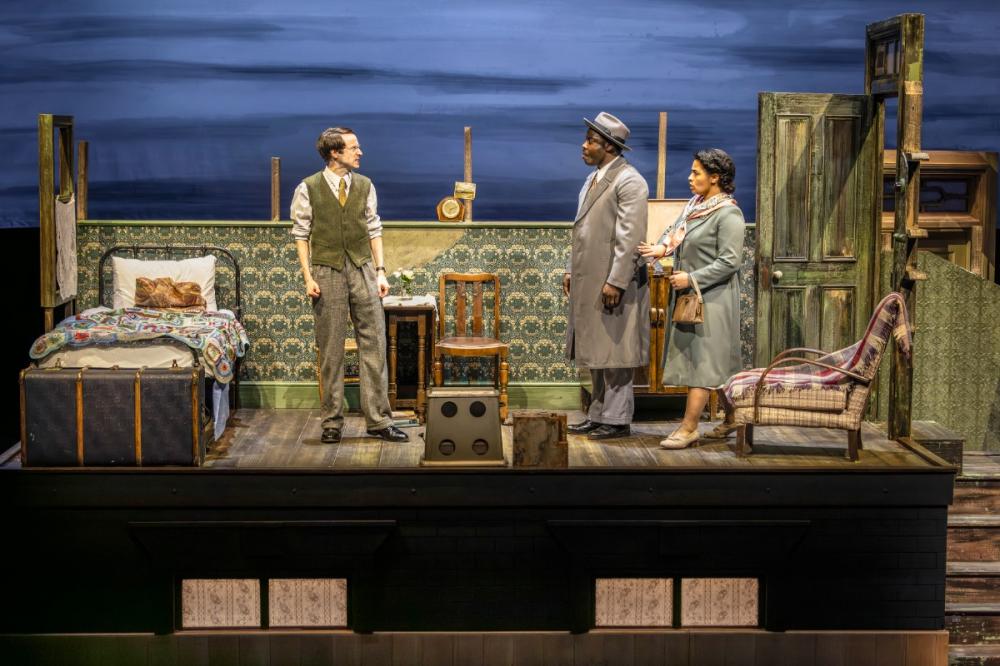
Mark Arends (Bernard), Daniel Ward (Gilbert), and Anna Crichlow (Hortense).
Photo: Pamela Raith Photography
Whilst picking out individuals from the cast, I feel special mention must go to the four leads (Mark Arends, Bronté Barbé, Ann Crichlow, and Daniel Ward), who variously capture the optimism, intolerance, sense of entitlement, and general mood of the time perfectly.
This is not just another Windrush story; it's a story of love, a sense of belonging, fighting for what you believe is right, and compassion for your fellow man. It asks us to consider where we would have stood on the issue of racism seventy years ago. Would we have been bigots, scared, or just plainly intolerant, or would we have embraced the newcomer for who they were— our fellow man on their own journey? The standing ovation by the packed Leeds Playhouse is testament to not only the cast and creatives who brought the story to the stage but also the wonderful story by Andrea Levy, who sadly passed away in 2019.