

Andrew Liddle, Guest Writer
The Picture Of Dorian Gray
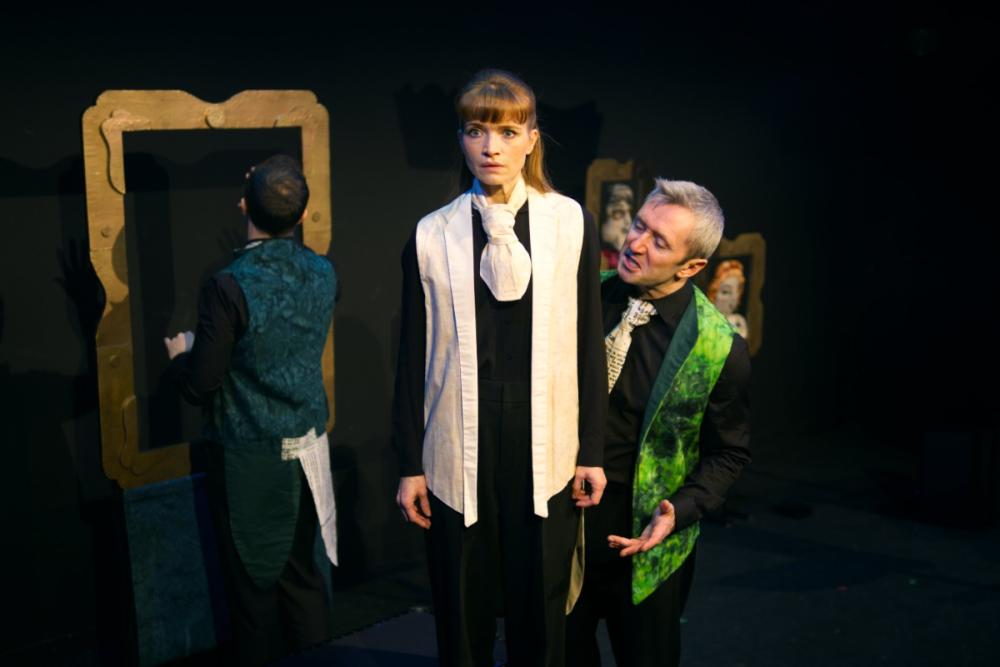
The Picture of Dorian Gray
Box Tale Soup is the groundbreaking company, founded in 2012, with a name that might suggest the boiling down, the putting in a nutshell, the encasing of the narrative and this is clearly their forte. Some of the tools they unpack when about their work - if we ourselves are being reductive in a way they are not - are mime and mask, puppetry and dance, symbolism and multi-role play. But such a catalogue does not begin to do justice to the entire expressive range of choreographed movement and stylised contact of the three actors permanently on stage, still less to their conventional long and short acting skills.
Wilde’s withering tale of beauty that will not perish is the tragedy of Aestheticism in conflict with both the natural world and the supernatural. The essence of beauty in its human form is that it must die, and quickly too. It is the precious bloom, delicate of petal, slender of stem, fragrant and fleeting. Beauty is youth, youth (is) beauty. It’s surprising that Oscar never said that, although he obviously thought it, undoubtedly feared it.
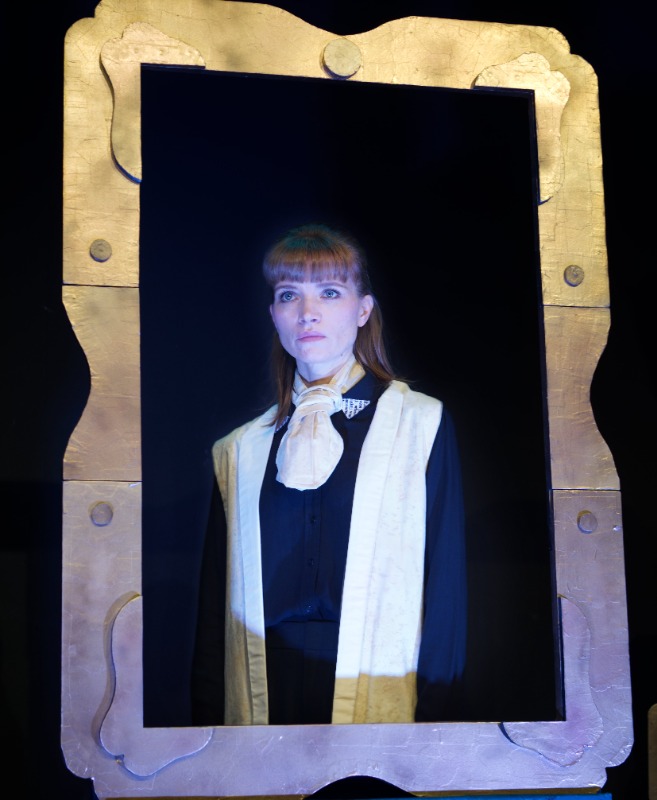
Antonia Christophers in The Picture of Dorian Gray
Pictures courtesy of SJT
Lord Henry Wotton (Noel Byrne), the corrupt and strangely prophetic corruptor, looks on in fascination and horror at Dorian’s cursed beauty as the shadows lengthen and he descends to the nether world.
All three actors are credited with this adaptation of the book. Byrne - who incidentally has a PGSE, focussed on Drama, from the University of Leeds, and took his degree in Theatre Arts at Manchester Metropolitan - is the co-founder of the company along with Antonia.
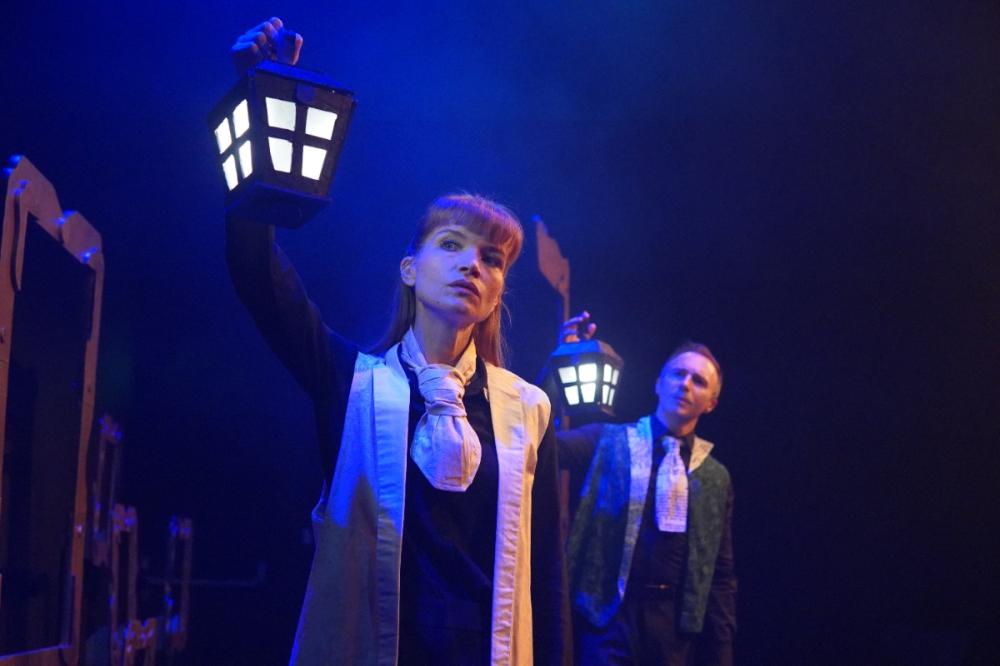
The Picture of Dorian Gray
Pictures courtesy of SJT
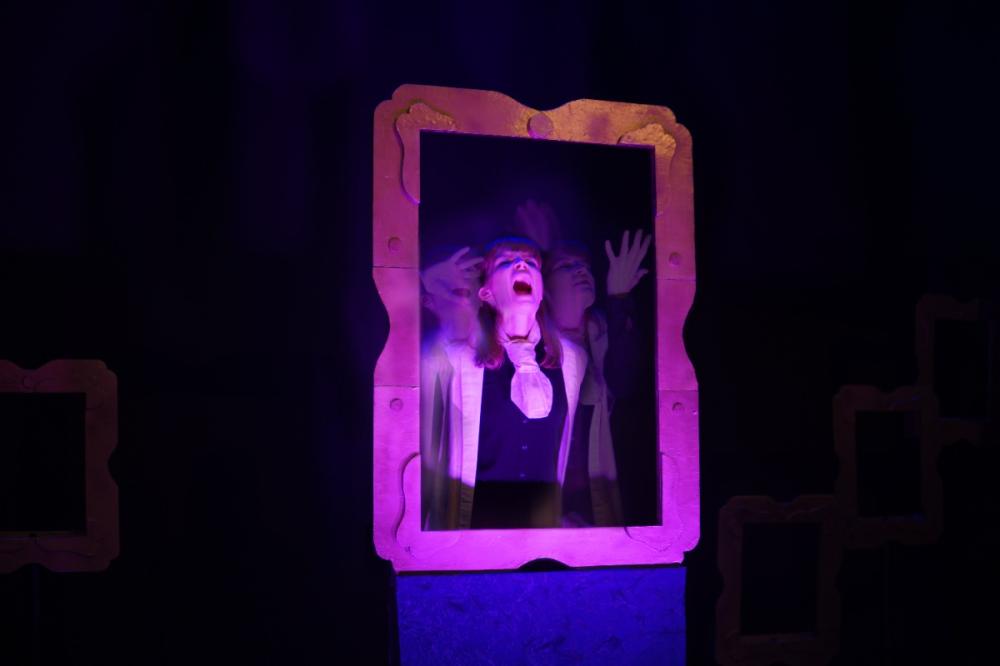
It is Antonia’s consummate skill that, among the flickering shadows and underscored by discordant sound, she is able to contort her features to have Dorian sneering back at his own hypocrisy and be disgusted by his own ghoulish selfhood. Laid bare on the canvas are the unspeakable truths hidden from the world. The bond he has with the picture is uncanny and unforgiving.
The intense power of this production grips us at each step down the primrose path, though years are stealing by. Key elements are the sound effects by Adam Lenson and the lighting design by Byrne. The mood-perfect music is composed by Dan Melros.
The book is of its nature a pastiche of several literary and cultural genres and it lends itself superbly to this alphabet soup of tasty dramatic ingredients that Box Tale bring to the boil.
The Picture of Dorian Gray
Pictures courtesy of SJT