

Andrew Liddle, Guest Writer
Winterreise In The Ryedale Heatwave: Icy Solitude At The Height Of Summer
.png)
Christopher Glynn & Mark Padmore
Photo: Nicola Corbishley
Staging Franz Schubert’s deathless Winterreise in the midst of a heatwave created an unintended antipathetic fallacy that worked remarkably well. The stark, winter-bound landscape of the cycle offered a welcome thematic counterpoint to the sunlight streaming through the lovely old church’s high windows onto bronzed faces.
Few modern singers are more closely associated with Schubert than Mark Padmore, one of the most distinguished tenors on the international stage. Acclaimed in particular for his interpretations of the composer’s song cycles, he was recently described by The New York Times as a 'Schubert master.' Possessing a tenor of uncommon beauty and intelligence, Padmore has performed Winterreise many times, invariably to acclaim, and has twice recorded it for Harmonia Mundi.
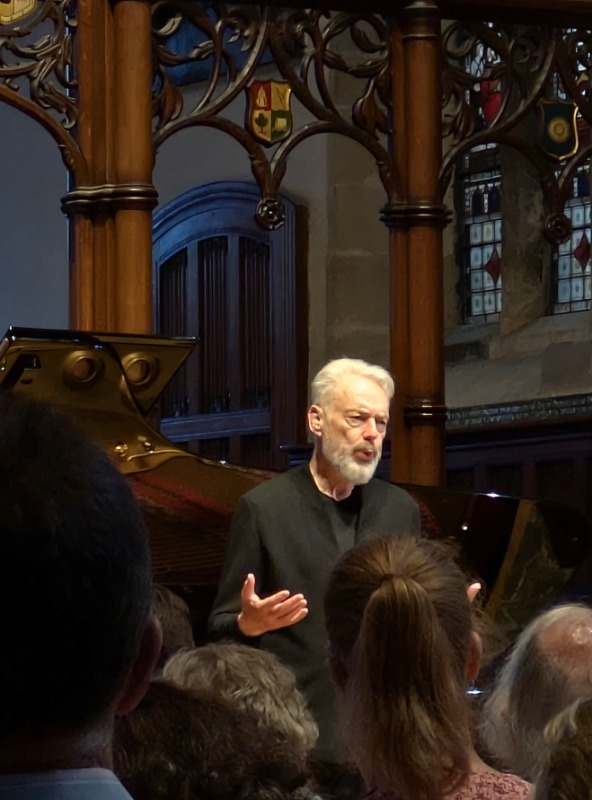
Mark Padmore
Photo: Nicola Corbishley
Winterreise occupies a singular position in the history of Western art song. Composed in 1827, scarcely a year before Schubert’s tragic death at the age of thirty-one, the cycle emerged during a period of deteriorating health and increasing intimations of mortality. While it should not be read as programmatically autobiographical, its uncompromising exploration of alienation, loss, and emotional disintegration resonates strikingly with the circumstances of the composer’s final years - and is deeply consonant with the romantic sensibility of the age.
The very idea of a song cycle was, at the time, a relatively recent innovation. Beethoven’s An die ferne Geliebte (1816) is generally acknowledged as the first true example, and when Schubert turned to set Wilhelm Müller’s poems only eleven years later he was still working within a nascent form. His earlier Die schöne Müllerin (1823) had enjoyed considerable success, yet its tale of rural love and jealousy appears almost benign beside the bleak psychological terrain of Winterreise, where despair announces itself from the very first bars.
.jpg)
St Peter’s & St Paul’s, Pickering
Photo: Rosie Barrett
The Wanderer’s descent recalls the trajectory of Goethe’s Werther, one of the defining literary figures of the age. Just as Werther’s inability to reconcile his intensely subjective emotional life with the demands of society leads to his destruction, Schubert’s protagonist finds himself estranged from the community he leaves behind. While Werther, however, remains consumed by the fever of active passion, the Wanderer has passed beyond such ardour. By the time we encounter him as a forlorn, jilted lover, the fire of youth seems to have given way to the crystalline stillness of resignation.
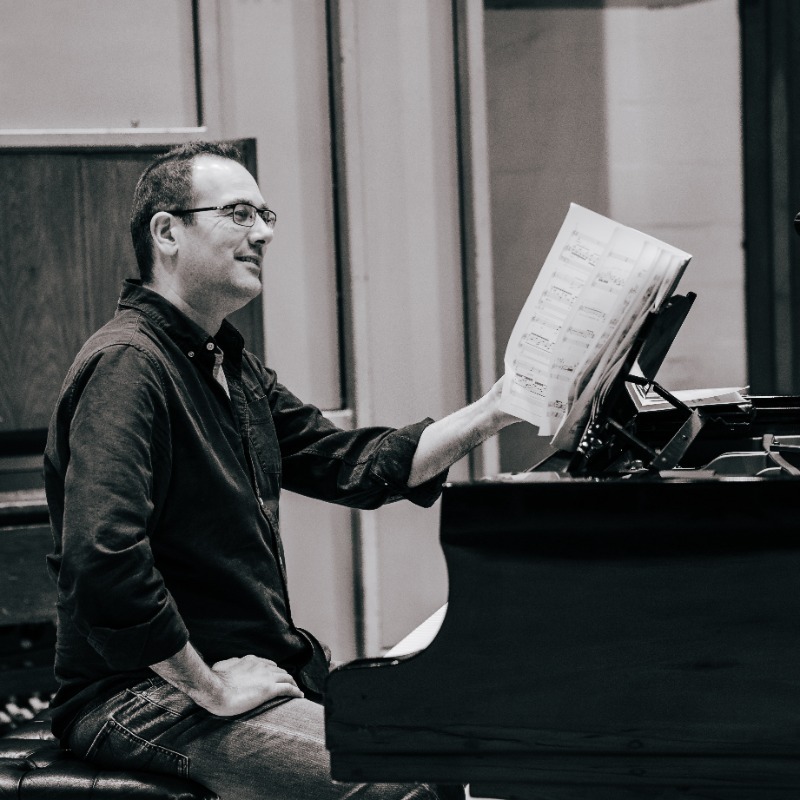
Christopher Glynn
Photo: Fox Brush Films
From the opening Gute Nacht ('I arrive a stranger, a stranger I depart'), Padmore traversed an extraordinary emotional range, moving from detached bitterness to pained reluctance, establishing the psychological contours of the journey ahead. The stunned numbness of Erstarrung (‘My heart is as dead, her image coldly rigid within it'), the cruelly alluring rustle of the archetypally Germanic linden tree in Der Lindenbaum, and the bitter disillusionment of Frühlingstraum all suggest a mind teetering on the edge of collapse, yet paradoxically determined to continue.
The partnership between singer and this most empathetic pianist proved fundamental to the success of the performance, Glynn transforming his instrument into an analogous narrative voice. He illuminated the score with countless subtle insights, for example, the tender colouring of the turn to the major key in the strangely valedictory exposition, Gute Nacht; the ominous circling crows of Die Krähe, the delicate rustling of the linden tree; and, not least, the momentary rallying call of the post-horn in Die Post. Throughout, the piano suggested that the landscape itself was complicit in the Wanderer's downfall, reflecting and amplifying the disturbances of his inner world.
In the final songs, Glynn’s tone production shaped the solemn chords of Das Wirtshaus with hymn-like serenity, while the accompaniment to Der Leiermann - 'The Hurdy-Gurdy man' - was stripped bare and desolate, yet profoundly compassionate. There remains something deeply ironic about Schubert’s choice of ending, which seems almost to anticipate surrealism by a good hundred years. After so much emotional and philosophical striving, the Wanderer’s final encounter is not with revelation, redemption, or even the finality of death, but with a ragged hurdy-gurdy player – “Barefoot on the ice, he totters to and fro, and his little plate remains forever empty” - grinding out his tune at the edge of society, a figure at once absurd, pitiable, and strangely transcendent is almost too painful to witness or contemplate.
What ultimately distinguished this performance was its commitment to the cycle’s central romantic paradox: the coexistence of lyrical beauty and existential desolation. By resisting theatrical excess and trusting the austerity of Schubert’s writing, Padmore and Glynn allowed the work’s ambiguities to emerge with extraordinary clarity.
.JPG)
Christopher Glynn & Mark Padmore
Photo: Nicola Corbishley
As the final spectral strains of Der Leiermann dissolved into silence, a reverential hush settled over Pickering Church, a perfect English Gothic setting for one of the crowning achievements of German Romanticism. For stretched seconds, neither performers nor audience seemed willing to break the spell. In that charged stillness, Schubert’s frozen landscape lingered with extraordinary vividness, suspended improbably in the midst of what has been a heatwave. Then, as Padmore and Glynn finally relaxed their concentration, the church erupted into thunderous and prolonged applause - spontaneous outpouring of powerful feelings, elation, awe, and gratitude for a performance of rare insight, emotional depth, and artistic integrity.
A final word must go to the producers of the festival in general and Christopher Glynn in particular, who was there to welcome members of the audience before taking the stage. Everything, including the programme with German text and parallel translation, was got-up to perfection.